By Arjun Mehta
Design patterns are reusable solutions to common problems. They're useful because they give us shared vocabulary. When I say "this uses the Observer pattern," other engineers immediately understand the architecture.
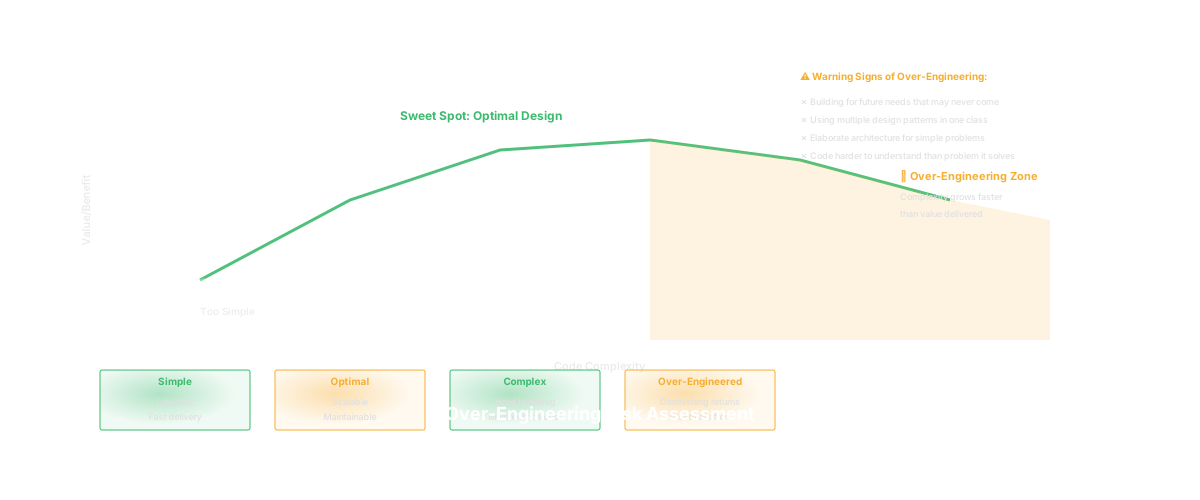
But design patterns are often misused. People apply them prematurely, creating complexity that wouldn't exist without the pattern.
Design Patterns in 60 Seconds
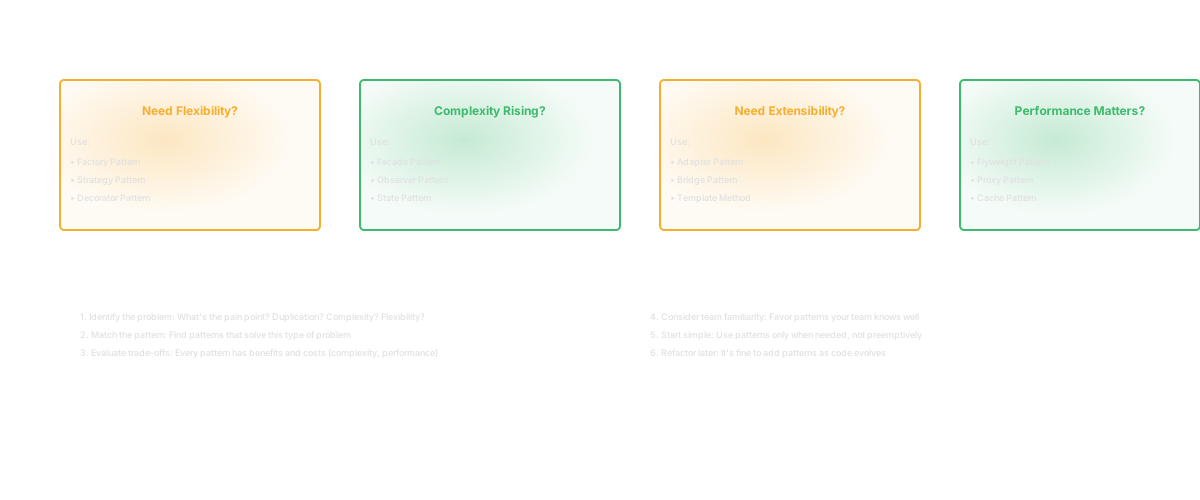
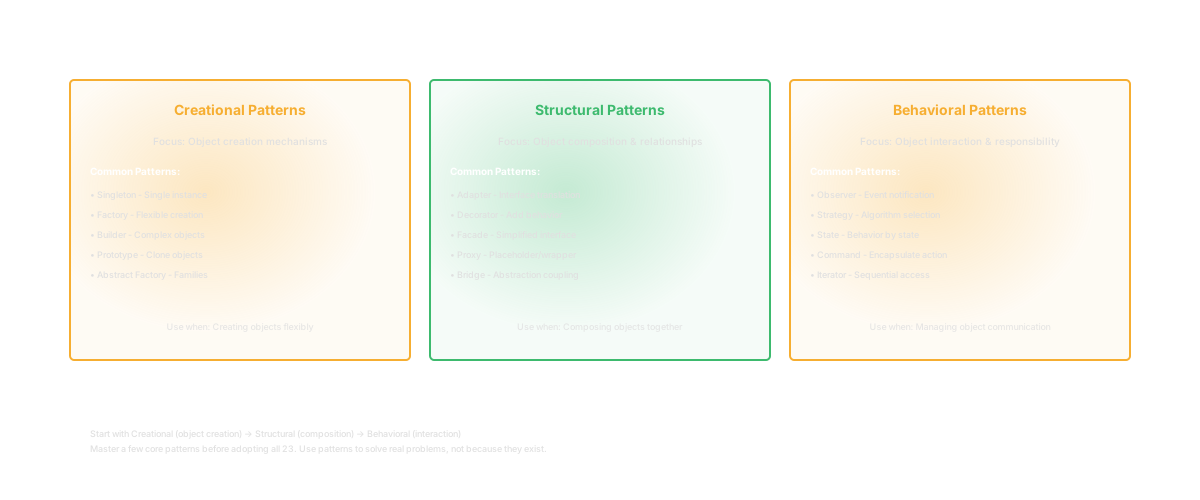
Design patterns are proven solutions to common structural problems in code. They help with: managing dependencies (Factory), handling events (Observer), switching between behaviors (Strategy), accessing data (Repository), and adding features without modifying existing code (Decorator). The real value is shared vocabulary. But apply patterns only when you see the problem they solve, not before.
Why Design Patterns Matter Now
First: communication. If you say "I'll use the Factory pattern for this," engineers know what you mean. You save explanation time.
Second: patterns exist because they solve real problems. The Observer pattern exists because event systems are complex. The Repository pattern exists because data access is complex and varies by source. Using the right pattern prevents you from solving the same problem twice.
Third: patterns are battle-tested. They're not invented by one person - they've been used in thousands of codebases and refined through experience.
But patterns are also cargo-culted. Junior engineers learn patterns in textbooks, see them in other code, and think "I should use patterns." No. You use patterns when you solve the problem the pattern solves.
Patterns That Show Up Most in Modern Software
Factory (Dependency Management): Instead of user_service = UserService(), you use user_service = service_factory.get_service("UserService"). The factory handles instantiation. Useful when you need different implementations in different contexts (test vs. production).
Observer (Event Systems): Instead of "when a User is created, call these functions," you use publish-subscribe. Code publishes events, other code subscribes to them. Decouples the event source from event handlers. Crucial for large systems where multiple components react to the same event.
Strategy (Pluggable Behavior): Instead of a giant if-else statement choosing how to process a payment, you have a PaymentProcessor interface with CreditCardProcessor, PayPalProcessor, StripeProcessor implementations. Caller doesn't care which one - they all have the same interface.
Repository (Data Access): Instead of spreading SQL queries throughout your code, you have a Repository class that handles all data access for one entity. Centralizes data logic, makes testing easier.
Decorator (Feature Flags and Middleware): Instead of process_request(request), you have a stack of decorators: log_request(validate_auth(sanitize_input(process_request()))). Each decorator adds behavior without modifying the original.
When NOT to Use Patterns
Single use case. You see code that could use the Observer pattern. But only one component cares about the event. Don't use Observer - just call the function directly.
Over-abstraction. The Repository pattern is useful. But I've seen codebases with Repository, RepositoryFactory, RepositoryConfiguration, RepositoryValidator layers. Each layer adds complexity without benefit. Use patterns to reduce complexity, not increase it.
Cargo cult adoption. "Every class needs an interface" (not true - use interfaces when you have multiple implementations). "Everything should be a plugin" (not true - use plugins when you have multiple strategies). Apply patterns where they solve a real problem.
Premature patterns. You see a pattern that might be useful someday. Don't apply it until you actually need it. The cost of adding a pattern is complexity. The benefit is solving a problem. If the problem doesn't exist yet, you're paying cost without benefit.
Real Examples from Common Architectures
A web server uses Factory to instantiate request handlers based on the HTTP method. Observer for events (user logged in, user created). Strategy for different database adapters. Repository for data access. Decorator for middleware (logging, auth, CORS).
A frontend app uses Observer for state changes. Decorator for higher-order components. Strategy for different rendering strategies. Factory for component creation.
Common Mistakes in Pattern Application
Using a pattern because it's cool, not because it solves a problem. Especially true for Dependency Injection - it's useful, but it adds complexity, and many small systems don't need it.
Naming patterns incorrectly. You build something called the "UserManager" but it's really the UserRepository plus some business logic. Correct naming helps future maintainers understand what's going on.
Stacking patterns. Factory that returns Repositories that use Observers to notify Decorators. Each pattern adds a level of indirection. Sometimes warranted, often not.
How Glue Helps
Glue shows which patterns are used where in your codebase. It surfaces: "You have 47 implementations of the Strategy pattern in different services - is this intentional?" or "This Repository is called by 30 different files - maybe it should be a Plugin?" This helps you identify both good pattern usage (shared across the codebase) and bad pattern usage (over-engineered one-off implementations).
Frequently Asked Questions
Q: Should we use dependency injection everywhere?
A: No. Dependency injection adds complexity. Use it where you have multiple implementations (test vs. production, different strategies). For simple dependencies, direct instantiation is clearer.
Q: What's the difference between a pattern and just good structure?
A: A pattern is a named, proven structure that solves a specific problem. Good structure is just reasonable organization. Not every architectural decision needs to be a pattern.
Q: How do we prevent over-engineering with patterns?
A: Require discussion before applying patterns. If an engineer proposes Factory, ask: "What problem are we solving?" If the answer is "we might need multiple implementations someday," that's not a problem yet. If the answer is "we already have three implementations," that's a problem.
Related Reading
- What Is Codebase Intelligence?
- What Is Code Intelligence?
- The Product Manager's Guide to Understanding Your Codebase
- The CTO's Guide to Product Visibility
- How to Do Competitive Analysis When You Don't Know Your Own Product
Further Resources