Comparison
ChatGPT is great for writing and brainstorming. Glue knows your actual codebase. Learn when to use each tool.
You can ask ChatGPT anything. It will synthesize research, write specs, and brainstorm product strategy. But the moment you ask it about your actual codebase, you've hit its wall - it has no idea what's in your product. Glue knows your codebase and can answer specific questions about it that ChatGPT fundamentally cannot.
ChatGPT is a general-purpose AI assistant that has learned from broadly available training data. For product managers, ChatGPT is useful for synthesis work: writing PRDs, drafting specifications, summarizing research, brainstorming naming conventions, workshopping messaging, and outlining strategy. It's fast and capable at tasks that don't require specific knowledge about your product.
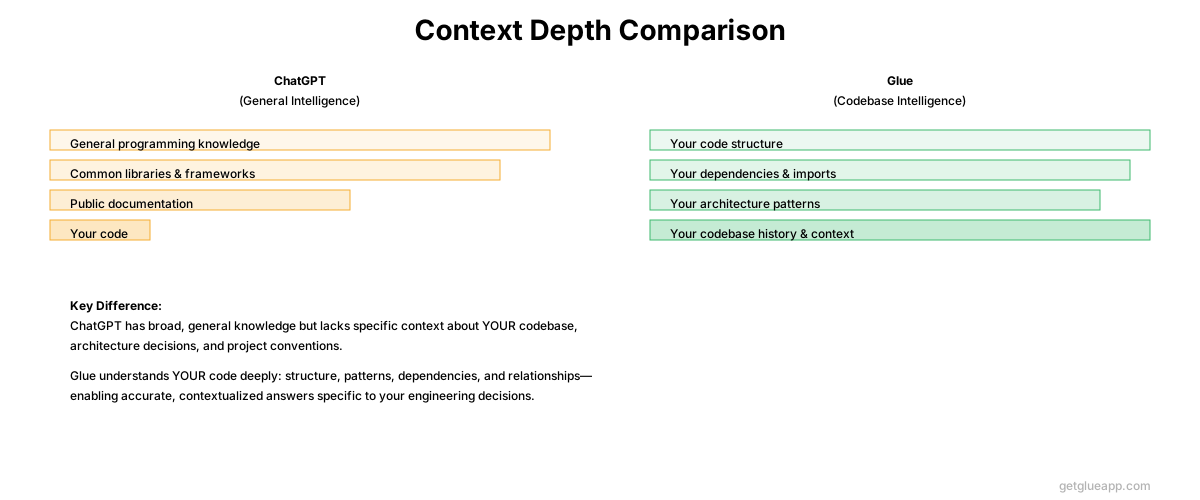
ChatGPT's strength is broad knowledge and synthesis. Its limitation is equally clear: it knows nothing about your specific codebase. If you ask ChatGPT "What's in our checkout flow?" it can't answer. It has never seen your code, doesn't know your architecture, and has no idea what your engineering team built.
Glue connects to your codebase and builds a live understanding of what's actually in your product. It answers questions like: "What modules handle user authentication?" or "Who owns the payment processing code?" or "What changed in the last sprint?" These are questions ChatGPT cannot answer, because Glue has direct access to your codebase and ChatGPT does not.
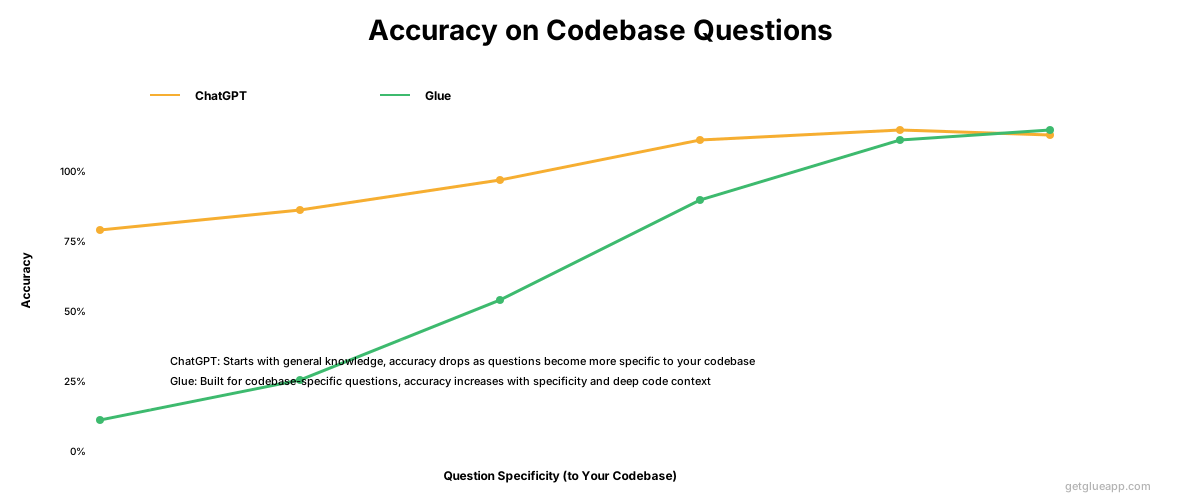
Glue is a specialized tool for a specific purpose: helping PMs and engineering leaders understand their own product's technical architecture without reading code themselves. It's not a writing assistant. It's a codebase intelligence layer.
The key difference: ChatGPT is general intelligence applied to broad knowledge. Glue is specialized intelligence applied to your specific codebase.
Think about it this way. ChatGPT can discuss authentication patterns in general terms and help you write a spec for an authentication feature. But it can't tell you what authentication code your team has already built, or whether you're duplicating effort, or what technical debt exists in your authentication layer. Glue can. Glue knows your codebase so specifically that it can answer questions about your actual product, not just patterns and theory.
| Capability | ChatGPT | Glue |
|---|---|---|
| General knowledge synthesis | Excellent | Not designed for this |
| Writing and drafting | Best in class | Not applicable |
| Brainstorming and ideation | Comprehensive | Not applicable |
| Knowledge of your codebase | None | Complete |
| Code ownership information | None | Primary feature |
| Technical architecture mapping | Generic patterns | Your actual architecture |
| Current state of your product | No knowledge | Always current |
| Feasibility assessment | General guidance | Specific to your code |
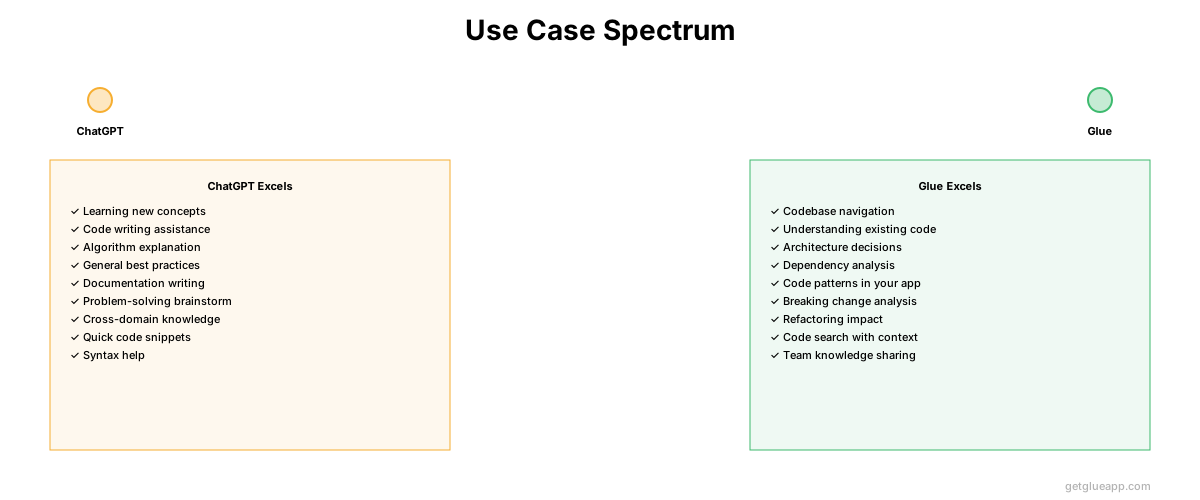
If you're writing a PRD and need help structuring it, use ChatGPT. If you're brainstorming feature names or messaging, ChatGPT is faster. If you need synthesis of broad research or industry patterns, ChatGPT excels. If you want to explore "what's a best practice for handling this type of problem?", ChatGPT is the right tool. If you're doing strategy work or writing, ChatGPT is designed for that. The limitation only appears when you ask about your specific product.
If you need to understand what's actually in your codebase, Glue is required. If you're assessing the feasibility of a feature request, Glue provides the context. If you need to know who owns a module or what the dependencies are, Glue answers directly. If you want to explain technical constraints to product team members, Glue provides the evidence. If you're trying to understand why a feature took longer than expected, Glue can show you the actual complexity.
Q: Can I just ask ChatGPT about my codebase? You can, but ChatGPT will be guessing. It has no knowledge of your specific codebase unless you paste code into it, which means copy-pasting large sections of your product's code into a third-party system - a security and privacy risk. Glue connects directly to your repo with proper access controls.
Q: Could ChatGPT eventually know as much as Glue? No. ChatGPT's training data has a knowledge cutoff. It can't access your live codebase and won't see your latest code changes. Glue always has current knowledge because it connects to your repo in real-time.
Q: Should I use both? Yes. Use ChatGPT for writing, synthesis, and broad thinking. Use Glue for understanding your codebase. They serve completely different purposes.
Q: Does Glue use ChatGPT? Glue uses AI to power natural language understanding, but it's designed specifically for codebase intelligence, not general-purpose assistance.
Q: Can Glue help with writing and strategy? No. Glue is specialized for codebase intelligence. For writing, research synthesis, and strategy, use ChatGPT or similar tools.
Keep reading