
AI for Product Management: The Difference Between Typing Faster and Thinking Better
You used Claude to write a PRD in ten minutes. Well-structured, comprehensive, acceptance criteria, success metrics. It was also completely wrong for what your team could actually ship.
This is the reality of AI for product management right now: lots of noise, and the signal is getting lost.
Most "AI for product management" tools fall into one category — they help you produce artifacts faster. Write a PRD. Generate user stories. Summarize meeting notes. Draft a competitive analysis. If the hard part of product management were the typing, these tools would have solved it.
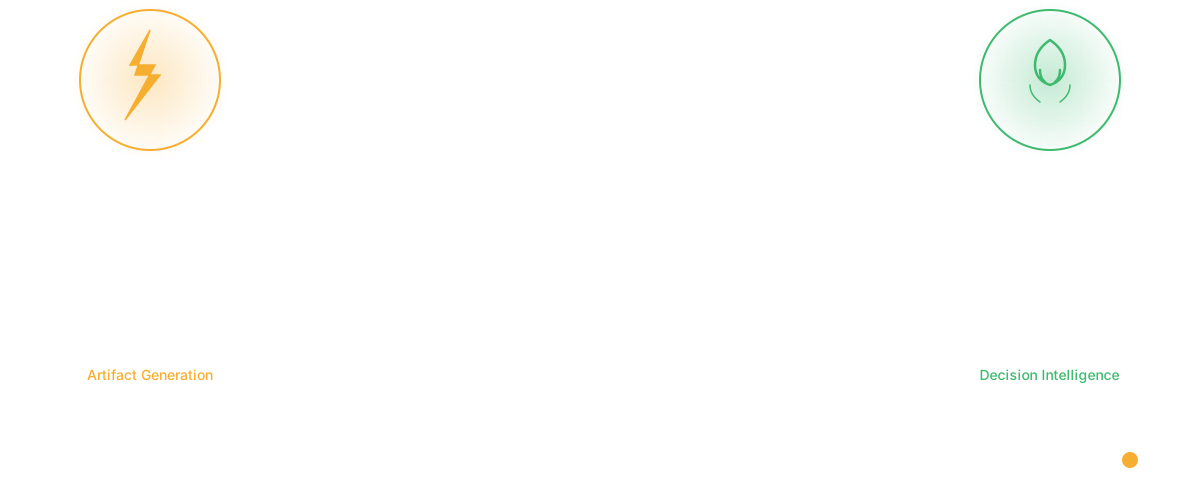
But if you've been in product long enough, you know writing faster isn't the problem you actually have.
The hard part is making the right decision when you have incomplete information. Should we build this feature or that one? Is this request aligned with strategy? Can we actually ship this in Q2? What's the right scope? What should we say no to?
These decisions sit at the intersection of what customers want, what we can build, what the market will pay for, and what aligns with where we're going. No AI tool that helps you write a PRD faster is helping you make these decisions better.
The Distinction That Matters
Artifact generation tools are useful. I use them daily. They save time on overhead — the stuff that eats calendar time without moving the needle on decisions. They're good at pattern-matching against thousands of PRDs and applying those patterns to your context.

But they can't answer the questions that actually matter.
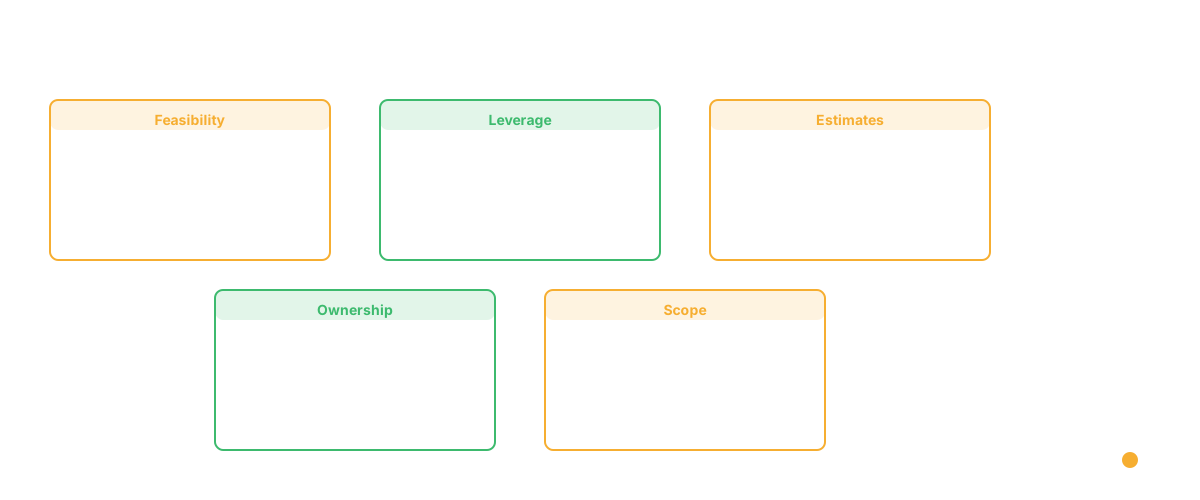
Is this technically feasible in the timeline we're talking about? That requires understanding your codebase — not in theory, but your specific architecture, your technical debt, your team's actual velocity. At Salesken, our PM used Claude to write a beautiful spec for real-time multi-language coaching. The spec was technically sound for a generic system. It completely missed that our coaching engine was already language-agnostic — the hard work was already done. Claude wrote a 4-month plan for 3 weeks of work because it didn't know our codebase.
What features do we already have that we're not leveraging? At UshaOm, where I ran a 27-engineer e-commerce team, we discovered during a codebase audit that we'd built a customer segmentation engine 18 months earlier. Nobody remembered it. The PM was about to spec a new one. We saved a month of work — but only because someone happened to remember. No AI writing tool would have surfaced that.
Why do our estimates keep slipping on this type of work? At Salesken, I noticed that any feature touching the analytics pipeline consistently took 2x the estimate. The pattern was invisible until I correlated cycle time data with module complexity. The analytics pipeline had circular dependencies that made every change ripple. Fixing the dependencies was the right investment — not better estimation techniques.
Who owns this part of the codebase? At Salesken, the "official" owner of our analytics service hadn't committed to it in 8 months. The actual owner was a junior engineer doing all the maintenance. Git history tells you who really owns what. Org charts don't.
Typing Faster vs Deciding Better
This is the gap between AI that makes you faster and AI that makes you smarter.
The former helps you produce work products. The latter helps you understand reality well enough to make better decisions.
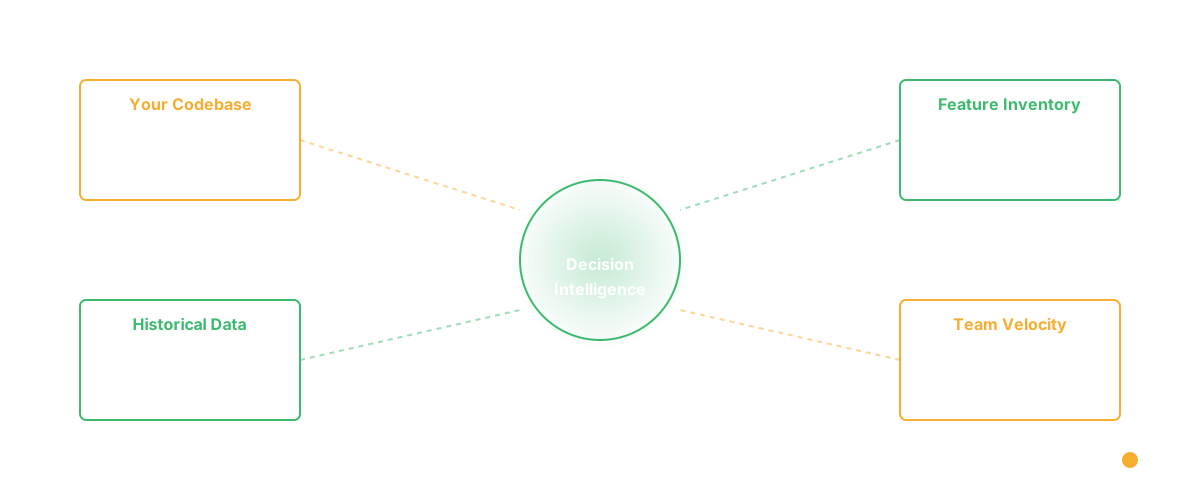
Decision intelligence is grounded in your actual codebase, your actual customer data, your actual historical performance. It surfaces real tradeoffs, not hypothetical ones. When you ask "is this feasible in Q2?" the answer is tied to your specific technical reality — your dependency graph, your code health, your team's capacity.
Here's what I saw across the teams I've worked with: the decisions AI can help with right now are the concrete ones. "Is this technically feasible?" has an answer — your codebase either supports it or it doesn't. "What features do we have that we're not leveraging?" has an answer — you can count them. "What's the right scope?" is harder, but it gets clearer when you have real information about what your system can and can't do.
What to Look For
When you're evaluating AI tools for product management, ask this: does it help you move faster, or does it help you decide better?
Most claim both. They're not the same thing.
The artifact generation tools will keep improving. ChatGPT will write better PRDs next year. The documents will be faster to produce. But they won't be smarter. They won't know your system any better.
The tools that matter in 2026 are built on a different foundation — they understand your specific reality. Your codebase. Your feature inventory. Your technical constraints. Your team's actual velocity. When AI is grounded in this reality, it stops being a template engine and becomes something that helps you decide.
At Salesken, the shift happened when we stopped using AI to write documents faster and started using internal tooling to understand our codebase better. The PM's roadmap accuracy went from about 60% (features shipped on time) to 85%. Not because she wrote better specs — because she understood the constraints before committing to timelines.
I wrote about this same dynamic in Cursor for Product Managers: the Cursor moment for PMs isn't about typing speed. It's about grounding decisions in your specific codebase reality. And in AI Product Discovery: the best discovery happens when customer signals and technical reality are visible in the same conversation.
The best product teams I know make decisions differently now. They're not starting with hypotheticals. They're starting with data about what they have, what they can build, what's working. They're using AI to synthesize that into clearer pictures and better questions. They're moving faster not because they're typing faster, but because they're making smarter decisions sooner.
That's the future. Not faster typing. Smarter decisions.
Related Reading
- AI Product Discovery: Why What You Build Next Should Not Be a Guess
- Cursor for Product Managers: The Next AI Shift Nobody Is Talking About
- AI Code Assistant vs Codebase Intelligence: Why Agentic Coding Changes Everything
- AI for Product Teams Playbook: The 2026 Practical Guide
- The Product Manager's Guide to Understanding Your Codebase
- The CTO's Guide to Product Visibility