Glossary
A competitive battlecard is a 1-2 page sales reference addressing competitor objections, built from actual deal intelligence, not marketing hype. Accuracy depends on knowing your own product's capabilities deeply - codebase visibility ensures claims are verified.
At Salesken, we were in a crowded market — three direct competitors, each claiming similar features. Understanding what they actually shipped versus what they marketed was the difference between smart roadmap bets and wasted quarters.
A competitive battlecard is a concise reference document, typically 1-2 pages, used by sales teams to quickly address competitive objections and position a product against specific competitors in live sales conversations. It provides talking points, feature comparisons, pricing context, and response scripts for the most common objections a sales rep will hear. A battlecard might cover: "Why should I choose your product over Competitor X?" "Your competitor does Y better - how do you respond?" "Your competitor costs less - what's the value difference?" "My team already uses Competitor X - why switch?" Battlecards are working documents created from real deal intelligence - they reflect what sales teams actually hear, not what product teams think prospects care about. Most battlecards fail because they're created from marketing copy and product specifications rather than from actual sales conversations. A battlecard saying "Our API is 3x faster" is useless if prospects aren't asking about API speed. A battlecard saying "We reduce implementation time from 8 weeks to 3 weeks" is valuable because that's a question real prospects ask. The difference between a great battlecard and a useless one is whether it's built from deal intelligence or from guessing.
Battlecards are a sales tool, but they inform product strategy. What objections show up in battlecards? Those are competitive gaps. If every battlecard says "Yes, Competitor X has that feature, but we're working on it," that's product feedback: the gap matters to deals. If a battlecard says "Our implementation is 5 weeks faster," that's a competitive advantage that should be marketed and invested in. Battlecards reveal which product capabilities drive buying decisions.
Battlecards also expose inaccurate product positioning. A PM might think the product's advantage is machine learning sophistication. The battlecard might reveal sales teams never use that talking point - they use implementation time and customer support as decision drivers. This creates a strategic question: Are we building the right advantages? Or are we building advantages that don't influence buying decisions while neglecting advantages that do?
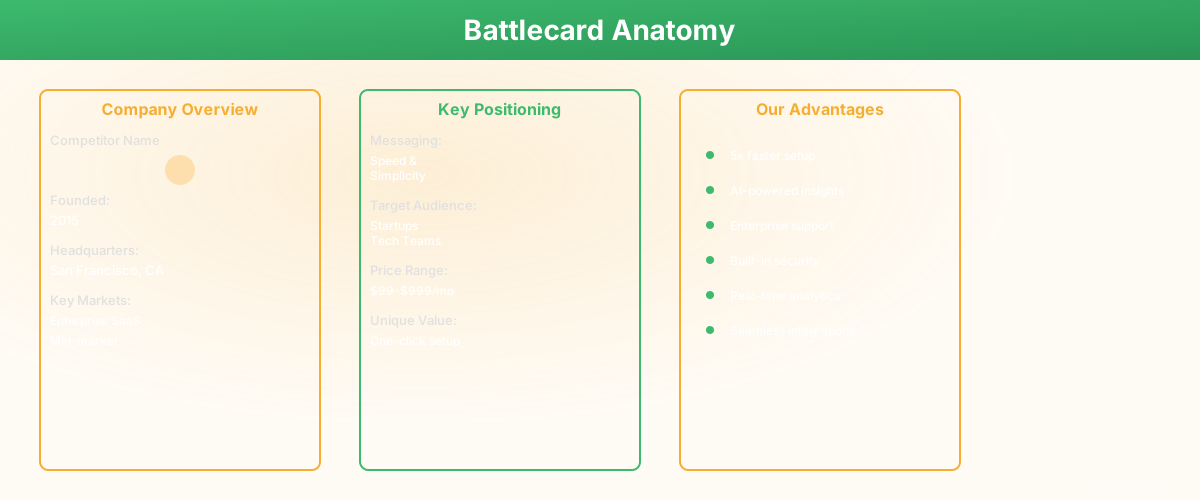
From a product integrity perspective, battlecards catch PM blind spots about competitive features. If the battlecard says "Competitor X has feature Z, but we have feature Y which is better," that's a product team claim that should be validated. Sometimes the claim is right - the features genuinely aren't comparable. Sometimes the PM is overrating their feature or underrating the competitor's. Battlecards force product teams to be honest about competitive position.
A company sells B2B project management software. The product competes directly with three major competitors. The sales team reports: "We lose deals to Competitor A because prospects say they need better mobile support. We lose deals to Competitor B because their implementation is twice as fast as ours. Competitor C is cheaper but sales teams usually pick us unless price is the constraint." That's deal intelligence.
Based on this, battlecards are created:
Battlecard 1: vs. Competitor A (Mobile)
Battlecard 2: vs. Competitor B (Implementation)
Battlecard 3: vs. Competitor C (Pricing)
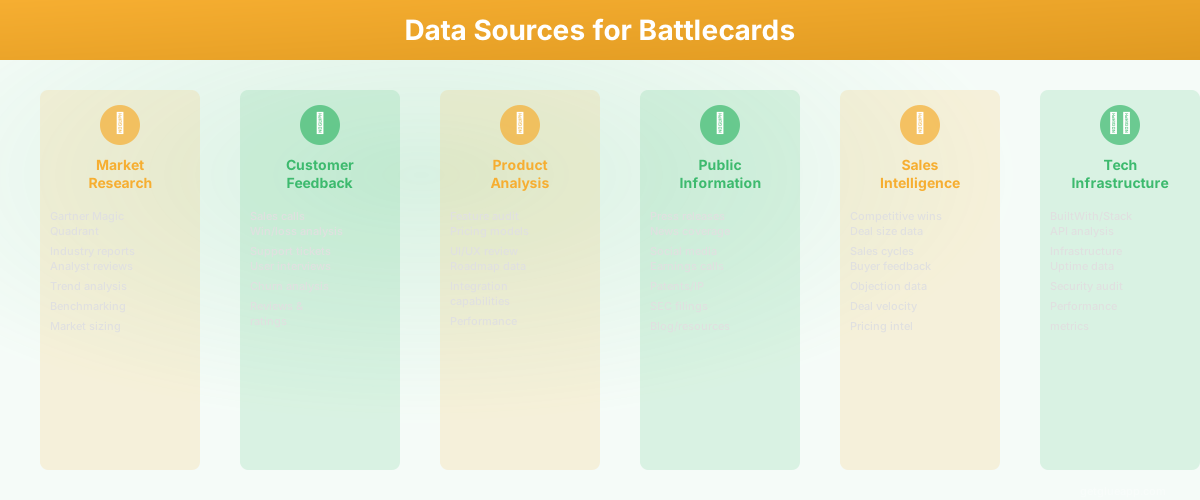
These aren't abstract feature comparisons. They're built on actual objections sales teams hear and strategies that work to close deals.
Battlecard accuracy depends on building from deal intelligence, not from guessing.
First, collect deal loss data: When the sales team loses a deal, they should record: Why did we lose? Was it feature gap, price, incumbent switching costs, or buying committee preference? Over time, patterns emerge: "We lose 40% of deals vs. Competitor A because of feature X. We lose 60% of deals vs. Competitor B because of price and implementation time." That's data, not guessing.
Second, validate competitive claims: Every battlecard claim should be verified. "Competitor X has feature Y" - is that true or marketing hype? The verification is simple: buy a trial account for the competitor, test the feature. "Our feature is better because" - is that true? Test both. Don't rely on product hunches or competitor marketing claims. If the product team can't verify a claim, it doesn't go in the battlecard.
Third, connect to codebase visibility: Here's where codebase intelligence adds value. A PM writing a battlecard makes claims like "We implement faster because our data model is more flexible." But is that true? Codebase intelligence can answer: "Our data model schema supports 50 field types. Competitor X's schema supports 20. That's a real structural advantage that explains implementation time differences." Or: "Our implementation is slower because we have 30 API endpoints to integrate with legacy systems. Competitor X has 5. We're not faster - we're just more complex." Codebase context keeps battlecards honest.
Fourth, update quarterly: Battlecards should be reviewed every quarter because competitors ship features and your product changes. A battlecard that says "Competitor X doesn't have feature Z" becomes obsolete if Competitor X ships Z next quarter. Quarterly review ensures battlecards stay current.
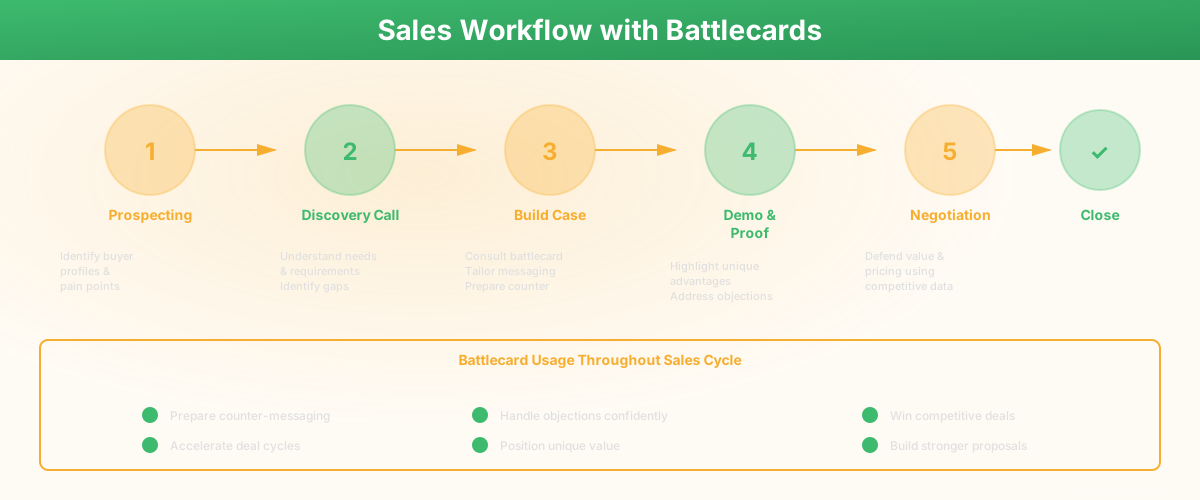
Fifth, source from frontline sales: PMs don't spend time in sales calls. Sales teams do. Battlecards should be built in conversation with sales, not imposed on them. "What objections are you hearing? What's actually changing minds in deals?" That's where accurate battlecards come from.
"Our battlecard should list all our features." That's a feature matrix, not a battlecard. A battlecard is a working document for salespeople closing deals, not comprehensive documentation. A great battlecard covers five things: the most common objection, the core response, one proof point, a diagnostic question to qualify the objection, and a close. That's it. Anything more is overhead.
"We should avoid negative positioning." Battlecards should acknowledge competitive strengths. "Competitor A's mobile app is objectively better for field teams" is honest and credible. "Our mobile is just as good as Competitor A's" when it's not is transparent dishonesty. Sales teams know the truth - they use competing products. Battlecards that aren't honest lose credibility quickly.
"Our product is objectively better, so we don't need battlecards." Competitive positioning is not about being objectively better - no product is objectively better at everything. It's about being better at things prospects care about for their use case. A prospect who needs offline mobile support will find Competitor A better, even if your product is superior at other dimensions. Battlecards help sales teams qualify which prospects fit your product's advantages.
Q: Who should own battlecard development? Product marketing owns development and updates. Sales leadership provides deal intelligence and validation. Engineering provides technical accuracy. Product strategy should review to ensure battlecards reflect actual product differentiation, not wishful positioning.
Q: How detailed should battlecards be? One to two pages maximum. If it doesn't fit, the rep won't read it in a sales call. One paragraph per major objection is the target: restate the objection, provide the core response (why our approach is better or different), give one proof point (customer reference, demo, or data), and suggest a diagnostic question to move forward.
Q: Should different battlecards target different buyer personas? Yes. An IT director and an end user have different priorities. A battlecard vs. Competitor A targeting IT directors might focus on security and integration capabilities. The same battlecard targeting end users might focus on ease of use and training. Separate battlecards for different personas improve effectiveness because they speak to actual priorities.
Keep reading