Glossary
AI product strategy uses market analysis, competitive intelligence, and demand forecasting to inform strategic positioning, growth opportunities, and market fit.
Building products across three companies — Shiksha Infotech, UshaOm, and Salesken — taught me that the hardest part of product development isn't building. It's knowing what to build and why.
By Priya Shankar
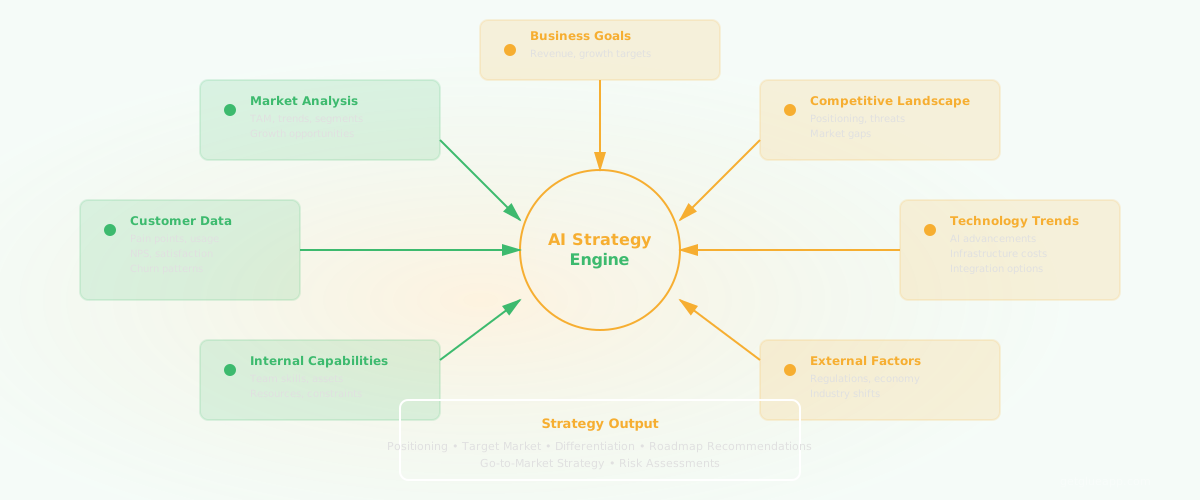
AI product strategy uses machine learning to identify market gaps, analyze competitive positioning, forecast customer demand, and model revenue scenarios—then surfaces strategic recommendations for growth, positioning, and product-market fit evolution. It's not strategy; it's strategic intelligence.
Strategy is inherently human: vision, judgment, intuition. But modern strategy is data-intensive: understanding customer needs across thousands of touchpoints, tracking 50+ competitors, forecasting demand with limited information. AI processes data at scale and surfaces patterns humans would miss.
An AI strategy system might ingest: all customer feedback, market research, usage data, competitive intelligence, revenue trends, and industry reports. Then surface: "Enterprise customers spend 40% of time on Feature X but churn within 6 months without Feature Y. SMB customers care primarily about price and integration. Your positioning emphasizes features enterprise doesn't value. Recommended realignment: focus clearly on Enterprise/SMB segments; sunset features neither cares about; invest in Y aggressively."
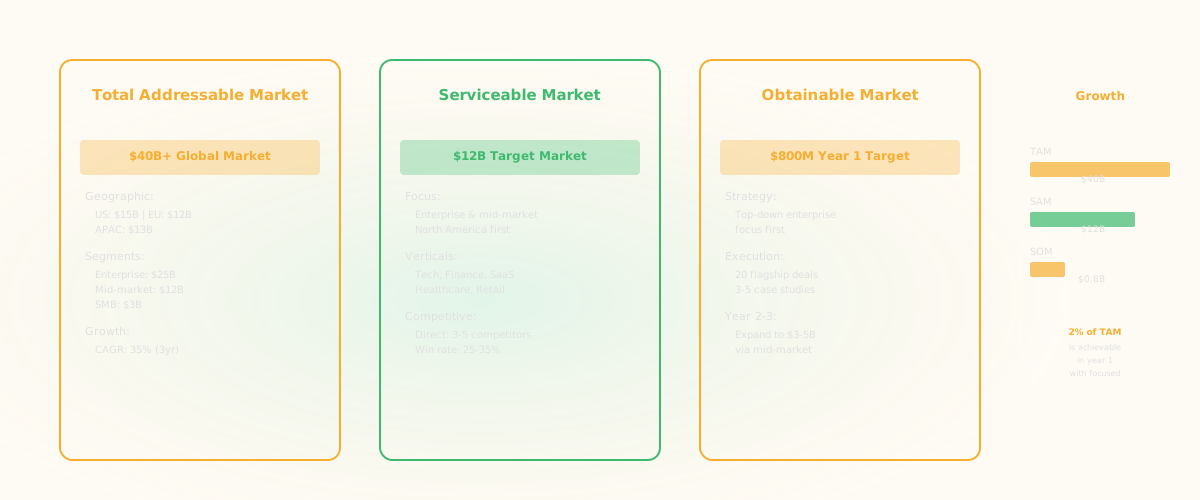
Now you have strategic clarity informed by data. You can still disagree. But you're disagreeing with evidence, not gut feel.
"AI will define our strategy." Never. Strategy requires human vision: where do we want to go, who do we serve, what values guide us. AI surfaces what's possible; you decide what's right.
"AI strategy insights are always correct." No. AI finds patterns in historical data. The future might differ. Use as inputs, not gospel. Cross-check with customer conversations and market intuition.
"We need AI strategy only if struggling." False. Even strong companies benefit from continuous strategic refresh. Markets shift faster than human intuition adapts.
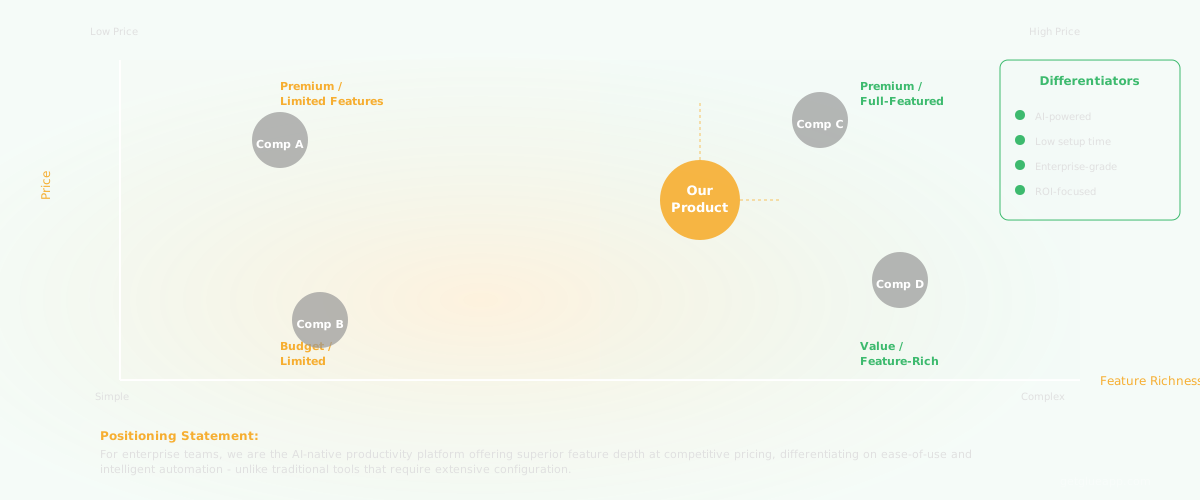
Strategy is the highest-leverage PM work. A correct strategic bet wins the market; a wrong one wastes years. Yet most strategy decisions are made with incomplete information and cognitive biases.
AI strategy systems don't guarantee correct decisions, but they increase hit rate dramatically by ensuring you're seeing the full picture: all customer needs, all competitive moves, all market signals. You're making bets from a complete dataset.
Strategic hypothesis accuracy: Do strategic bets result in expected outcomes? If you predicted "Enterprise segment will grow 40%," did it? Track forecast accuracy over time.
Market share movement: Are you gaining share in target segments? Strategy should translate to competitive advantage and growth.
Customer retention by segment: Do target-segment customers stay longer and expand revenue more? Validates segment strategy.
Revenue per strategic bet: Did strategically focused features generate expected revenue? ROI on strategic capital is the truest measure.
1. Market Intelligence AI continuously scans market signals: competitor launches, industry reports, analyst coverage, social media sentiment, job postings (which reveal competitor priorities), and patent filings. This creates a real-time market map that updates automatically.
2. Customer Intelligence AI aggregates and analyzes all customer touchpoints: support tickets, feature requests, churn reasons, NPS responses, usage analytics, and sales call transcripts. Patterns emerge that manual analysis misses: "Customers who use Feature A but not Feature B churn at 3x the rate."
3. Technical Intelligence AI connects product strategy to codebase reality. "We want to expand into enterprise SSO, but our auth module has a bus factor of 1 and high code complexity." Technical intelligence ensures strategy is feasible, not aspirational.
The most common failure mode in product strategy: great strategy, impossible execution. The strategy says "launch multi-tenant support in Q3." Engineering discovers the database schema can't support multi-tenancy without a 6-month rewrite.
AI product strategy systems that connect to your codebase can catch this gap:
This is where codebase intelligence meets product strategy. Strategic decisions informed by technical reality are dramatically more likely to succeed.
Q: How do we balance AI insights with founder/CEO vision? Tension is healthy. Founder vision drives long-term bets; AI insights ensure those bets account for market reality. Best strategies integrate both.
Q: What if AI strategy conflicts with our existing roadmap? Even better. That's a moment to revisit assumptions. Does your roadmap reflect current market conditions or outdated beliefs?
Q: Can AI help us identify new markets or pivots? Yes. By analyzing churn reasons, emerging customer needs, and competitive moves, AI can surface "this segment is high-growth" or "customers are asking for adjacent market needs."
Q: How far ahead can AI forecast strategy? Realistically 2-3 quarters. Beyond that, uncertainty explodes. Use quarterly strategy reviews to refresh forecasts with new data.
Keep reading