
Scope creep is the uncontrolled expansion of project requirements after planning is complete, responsible for an estimated 40% of sprint overruns in product development teams. Effective scope creep prevention requires three mechanisms: visible tradeoff communication ("if we add this, we cut that"), a dedicated interruption buffer (typically 1 week per 5-week sprint reserved for unplanned requests), and explicit phase-based commitments ("Phase 1 in 4 weeks, Phase 2 in 6 weeks") rather than overambitious all-at-once timelines. Codebase visibility directly reduces scope creep by enabling accurate estimates — knowing what's already built prevents re-estimating existing functionality as new work.
At every company I've led, scope creep was the silent killer of sprints. At Salesken, I tracked it explicitly — 40% of our sprint overruns were caused by requirements that expanded after planning.
By Priya Shankar
Scope creep starts innocently. "While you're at it, can we add this?"
One additional feature. Seems small. Your timeline doesn't change. Your estimate was conservative anyway.
Except it wasn't. And now you're late.
Scope creep is the difference between shipping on time and explaining delays to stakeholders. Between profitability and losses. Between morale and burnout.
It kills products silently because it doesn't feel like a crisis. It feels like collaboration.
Why It Happens
Scope creep doesn't happen because product managers are incompetent or engineers are weak. It happens because:
1. Estimates are inflated. You estimate a feature at 5 weeks. The engineer knows it's actually 4, but they add buffer "just in case." Now you have 1 week of hidden capacity. That gets filled immediately with "quick asks."
2. Priorities aren't clear. You don't say no to Feature B because Feature B might be important. So Feature A gets interrupted by Feature B. Then Feature C. Your team is context-switching between half-finished work.
3. Everyone talks directly to engineers. Sales has an idea. Customer success has a request. Someone overhears something in a meeting. All bypass product and go straight to engineering. Your backlog becomes unmanaged chaos.
4. Success looks different to everyone. Product thinks success is shipping on deadline. Engineering thinks it's quality code. Customers think it's getting features. You're optimizing for three different things simultaneously.
5. Nobody tracks the creep. You start with 40 points of work. Finish with 62. But you never see the +22. It just happened in a thousand small adds.
The Real Cost
Scope creep costs more than delays.
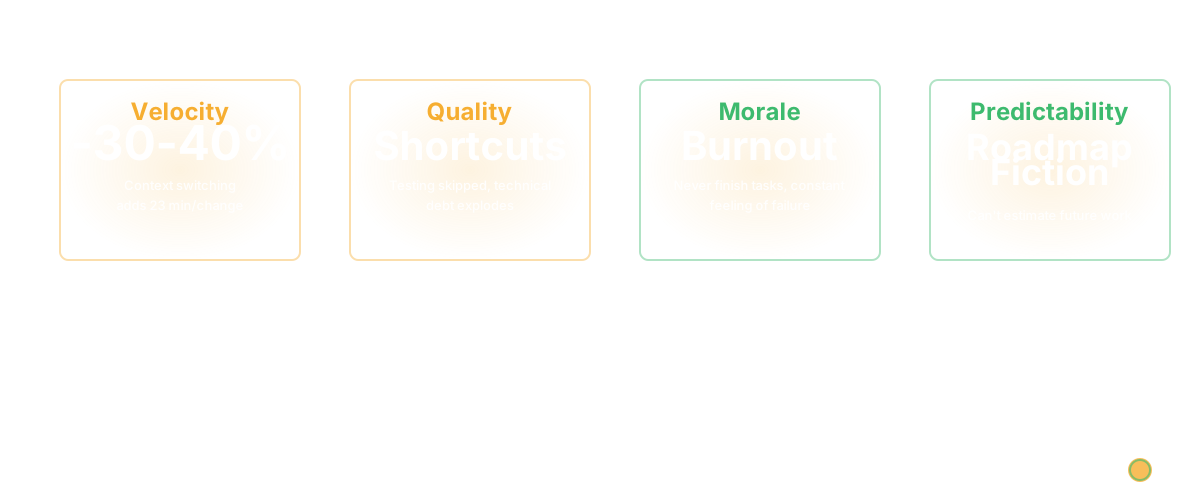
Velocity tanks. Every interruption for a scope change costs 23 minutes of context-switching. Your team's throughput drops 30-40% as they jump between tasks.
Quality suffers. Engineers rushing to fit scope additions cut corners. Testing gets skipped. Refactoring doesn't happen. Technical debt explodes. The code debt costs you more than the original feature.
Morale breaks. Engineers commit to finishing Feature A. Scope creep adds Feature B, C, D. They never finish anything. They feel like they're failing constantly. Burnout follows.
Predictability dies. You can't estimate future work because you don't know what scope creep will add. Your roadmap becomes fiction.
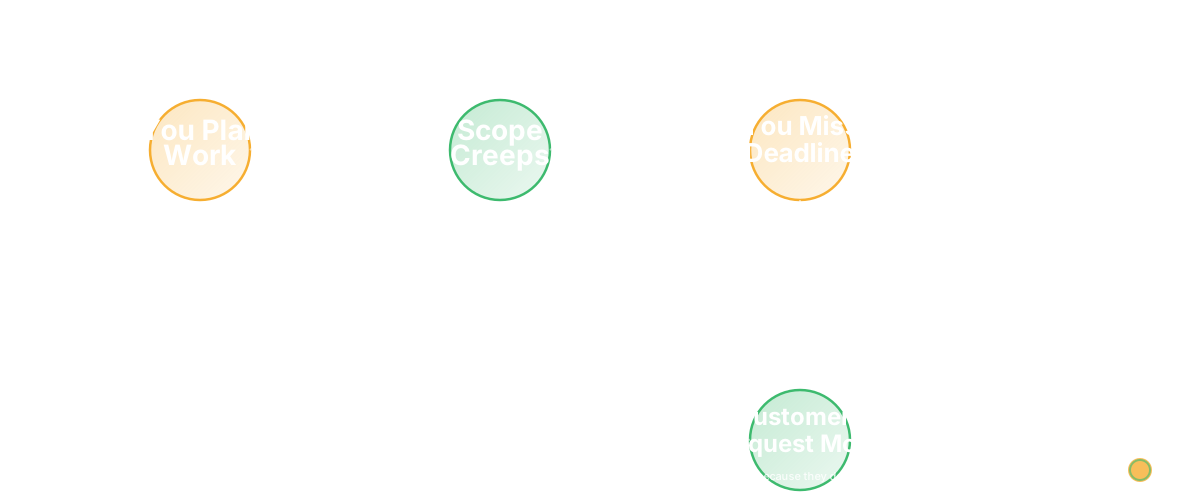
Customer credibility erodes. You promise a feature in 3 months. Scope creep delays it to 5. Customer loses confidence. They start requesting extra scope as insurance because they don't trust you'll deliver what you promised.
How to Actually Stop It
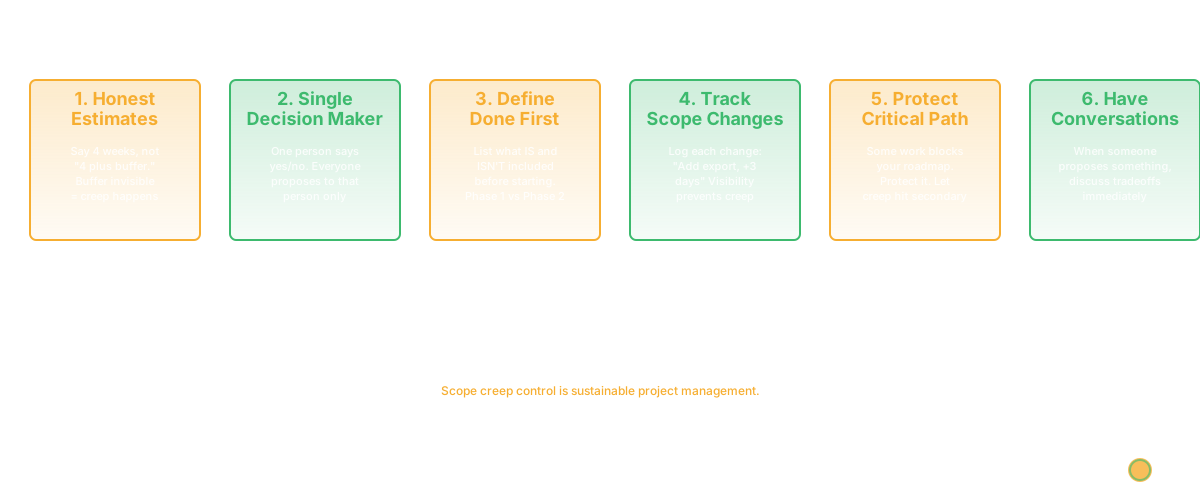
1. Have Honest Estimates
If a feature is 4 weeks, say 4 weeks. Not "4 weeks plus buffer." Honest estimates.
Why? Because buffer is invisible. If engineers are adding 25% buffer to everything, you're not managing a real backlog. You're managing a fiction. That buffer gets consumed by scope creep and you never see it happen.
Alternative: Do have buffer in your roadmap. But make it explicit. "Feature A: 4 weeks. Team capacity: 5 weeks. Buffer: 1 week for firefighting and interruptions." Now scope creep is visible. Adding something consumes that buffer, and you see it.
2. Have a Single Product Decision Maker
If everyone can propose features to engineers, you have chaos.
One person decides what gets built. That's the product manager (or product lead, or VP of Product—whoever owns roadmap). Everyone else proposes ideas to that person. That person decides if it changes the plan.
Why? Because someone needs to say no. And saying no is a decision that requires authority.
If a customer requests Feature X, sales can't commit to it. They tell the customer "that's interesting, I'll raise it with product." Product evaluates it against other priorities. Maybe it gets added. Maybe it doesn't. But it doesn't sneak in through side channels.
3. Define Done Before You Start
Scope creep thrives in vagueness. "Build a dashboard" could mean 1 week or 3 weeks depending on what you include.
Before you start, agree on what's included and what's not. "We're shipping: user list, user search, user detail view. We're NOT shipping: user export, custom filters, integration with our analytics tool." (Those are Phase 2.)
Why this works: Engineers can say no to additions by pointing to the list. "That's not in Phase 1." It's not ambiguity. It's clarity.
4. Track Scope Changes Visually
When scope changes, make it visible. Add a line item: "Scope Change: Add export feature, +3 days."
Why? Because scope creep is invisible when it happens gradually. If you track it, you see it. And you can make a conscious decision: "Do we want to delay Feature A by 3 days to add this? Or do we ship on time and defer this?"
Without tracking, scope creep happens and you never choose. It just happens.
5. Protect Your Critical Path
Some features matter more than others. The critical path is the work that directly blocks your roadmap and revenue.
Don't let scope creep touch the critical path. That work is protected. Interrupts go to a separate buffer.
Why? Because if scope creep delays your critical path by 2 months, your entire roadmap slips. If it delays secondary work, you cut secondary work instead.
6. Have Scope Creep Conversations Early
When someone proposes an addition, have the conversation immediately. Not at end of sprint.
"That's interesting. It's not in current scope, but I want to evaluate it. Is this higher priority than Feature Y? If yes, we cut Feature Y. If no, it goes in the backlog for later."
The conversation makes tradeoffs visible. You're not ignoring the idea. You're making a choice about priority.
Why Engineering Leaders Need This
You can't predictably ship if scope is creeping constantly. Your team can't focus. They can't finish anything.
Worse: your engineers internalize the message that planning doesn't matter. They start making decisions on the fly. Quality dies. Debt explodes.
Scope creep control isn't bureaucracy. It's the foundation of sustainable velocity.
Why Using Glue Helps
When you understand your codebase, you can estimate better. You know what's already built. You know where architecture will support changes easily and where it will require rework. You know where technical debt is hiding.
Better understanding means better estimates. Better estimates means less buffer creep. With Glue, you can ask: "What payment integrations do we already have?" If you already have Stripe, Glue tells you instantly. You don't estimate Feature X as new work when it's already built.
That's the connection: visibility prevents scope creep by preventing misunderstanding.
Frequently Asked Questions
Isn't saying no to customers bad for business? No. Committing to everything and delivering late is worse. Customers respect commitment more than ambition — and your sprint velocity will reflect the difference. "We'll ship Phase 1 in 4 weeks and Phase 2 in 6" is better than "we'll ship everything in 8" and then delivering in 16.
What if scope creep comes from leadership? Then you have a bigger problem. But the solution is the same: make tradeoffs visible. "If we add this, we cut that." Leadership can make informed decisions once they see the cost.
How do we handle urgent requests that appear mid-project? Have a separate buffer for interruptions. "We have 5 weeks planned. 1 week is reserved for firefighting. Urgent requests can consume that buffer, but they can't touch the core work." Once the buffer is gone, new urgent requests displace planned work — you have to choose which planned feature to defer. Automated sprint planning can help enforce these boundaries systematically.
Related Reading
- AI Product Discovery: Why What You Build Next Should Not Be a Guess
- Automated Sprint Planning: How AI Agents Build Better Sprints
- Sprint Velocity: The Misunderstood Metric
- Cycle Time: Definition, Formula, and Why It Matters
- DORA Metrics: The Complete Guide for Engineering Leaders
- Software Productivity: What It Really Means and How to Measure It
- Why Your Roadmap Keeps Slipping