
By Arjun Mehta
Most engineering onboarding is broken.
New engineers get access to Slack, meet the team, sit through a 30-minute sprint overview, get pointed at a GitHub repo, and sent off to find their first task. Somewhere in the next month they'll do a 1:1 with their manager, get an overview of the tech stack, and be told "look at the codebase, you'll learn it."
Six months later, they're productive. That's the baseline at most companies - a year-long ramp to full velocity at senior levels, six months for mid-level engineers.
This is fixable. The fastest-onboarding teams do things differently. And their advantage isn't that they hire smarter engineers. It's that they onboard better.
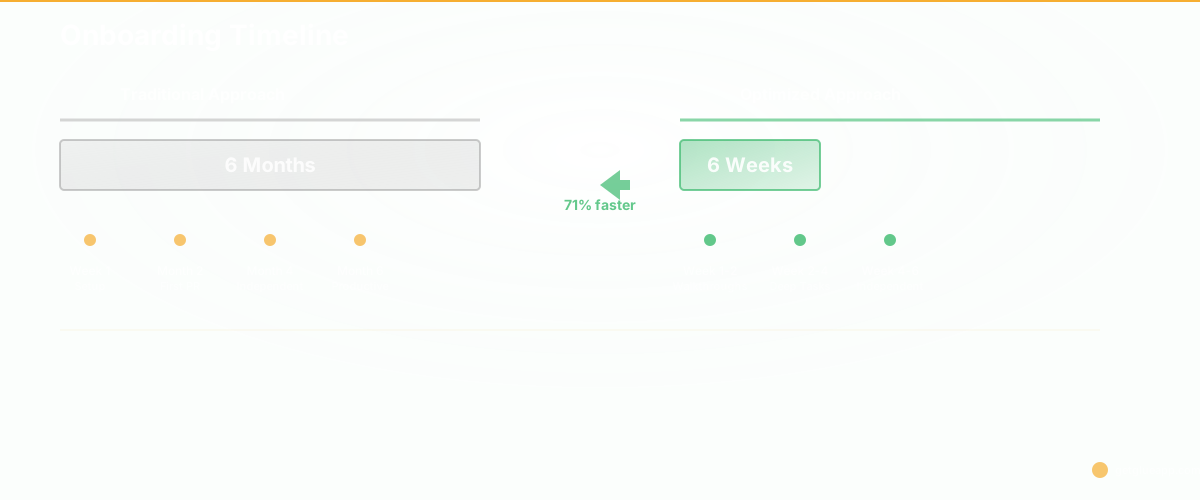
The Core Problem: Process Over Codebase Understanding
Typical onboarding spends weeks on process. You learn how the team does sprints, how Jira is organized, what the deploy process is, how incidents are handled, what the code review standards are.
This is necessary. But it's not sufficient. And it often crowds out the work that actually drives productivity: understanding the codebase.
Here's the dynamic: a new engineer who understands the process but not the codebase will be slow for months. They know how to file a Jira ticket and how to create a PR. But they don't know why the payment system is split across three services. They don't know that the authentication module was rewritten two years ago and there's still legacy code hanging around. They don't know why a seemingly-simple feature request is actually complex (because the underlying code is fragile or poorly understood).
A new engineer who understands the codebase but doesn't know the process will figure out the process quickly. Processes are learnable. Codebase understanding is harder and takes longer.
The goal: flip the priority. Spend significant time on codebase fluency. Process can be learned on the job.
What Does Codebase Fluency Mean?
Not "knowing where everything is." That's just code geography. Fluency is deeper.
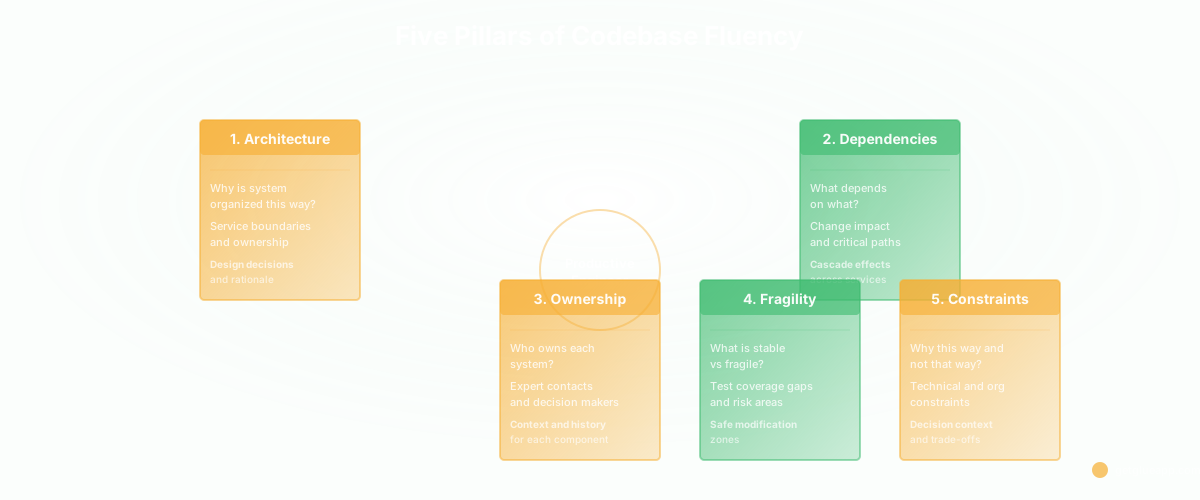
A codebase-fluent engineer can:
-
Understand the architectural decisions - why is the system split this way? Why does this service own this responsibility? What was the thinking behind splitting user auth from user profiles?
-
Navigate the dependency graph - what depends on what? If I change this module, what else breaks? What are the critical paths?
-
Find ownership and context - who understands this system? Who built it? Who maintains it now? If I have questions, who do I ask?
-
Identify fragile areas - which code is stable and can be modified freely? Which code is fragile and needs careful handling? Which areas have weak test coverage?
-
Understand the constraints - why do we do it this way and not that way? What technical or organizational constraints are baked into these decisions?
An engineer with this understanding can take a task, know roughly how long it should take, understand the risk, and execute. An engineer without this understanding will be blocked repeatedly.
How to Build Onboarding for Codebase Fluency
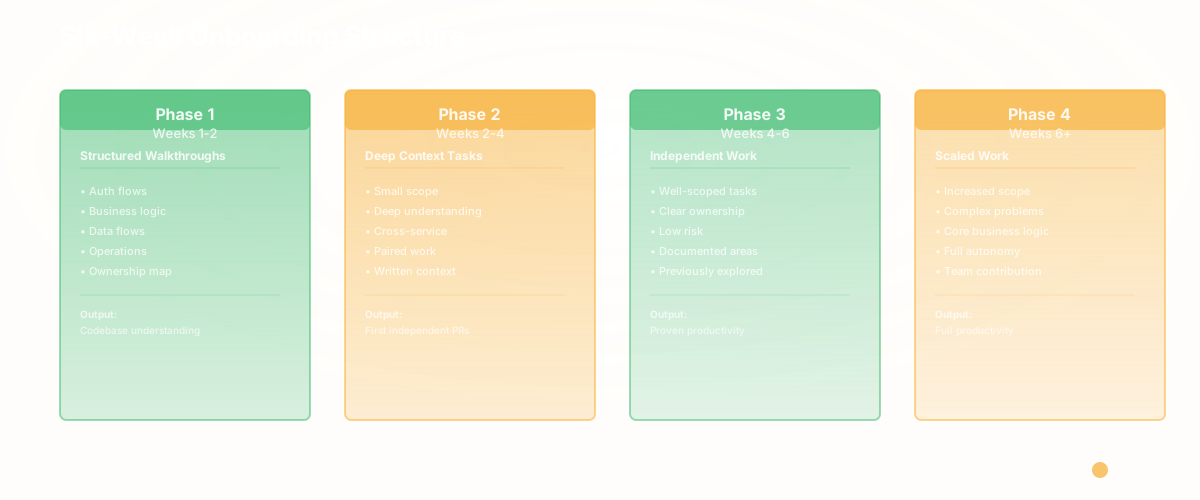
Week 1 - 2: Structured Codebase Walkthroughs
Don't have new engineers explore on their own. Pair them with senior engineers (not necessarily their manager) and do structured walkthroughs.
Not "here's the codebase, go explore." Instead: "here's the user signup flow - here are all the services it touches, here's why each one exists, here's who owns each one, here are the edge cases that caused incidents, here's where the code is fragile."
Do this for the 4 - 5 critical flows: how authentication works, how the core business logic flows, how data gets to users, how operational concerns (logging, monitoring, deployment) are handled.
This takes 10 - 15 hours, spread over two weeks. It's the single most valuable investment you can make in a new engineer's ramp.
Week 2 - 4: First Tasks with Deep Context
Don't start with "fix a bug" or "add a feature." Start with tasks that are geographically small but contextually deep.
Example: instead of "add a new field to the user profile," start with "move a feature flag from the old system to the new system." This task is small (a few hours of work), but it requires touching multiple services, understanding why the migration is happening, understanding the constraints.
Pair this with explicit context-setting: "Here's why we're doing this migration. Here's what the old flag system looks like and why we're replacing it. Here's the new system. Here are the risks. Here's who to ask if you have questions."
Week 4 - 6: Independent Work with Documented Constraints
After 4 weeks, the engineer should be ready for independent work. But set them up for success: pick tasks carefully.
Ideal properties of early-onboarding tasks:
- Small (1 - 3 days of work)
- In areas with good codebase documentation and clear ownership
- Not on the critical path (low stakes if they need to revise)
- Preferably in areas they've already explored in walkthroughs
Avoid: ambiguous requirements, complex architectural decisions, code with unclear ownership, code in fragile areas.
Weeks 6+: Increase Scope and Complexity
By week 6 - 8, they're productive. They understand the codebase. They know who owns what. They know which areas are stable and which require careful handling.
From here, scope and complexity can increase naturally.
Measurement: What's Productive?
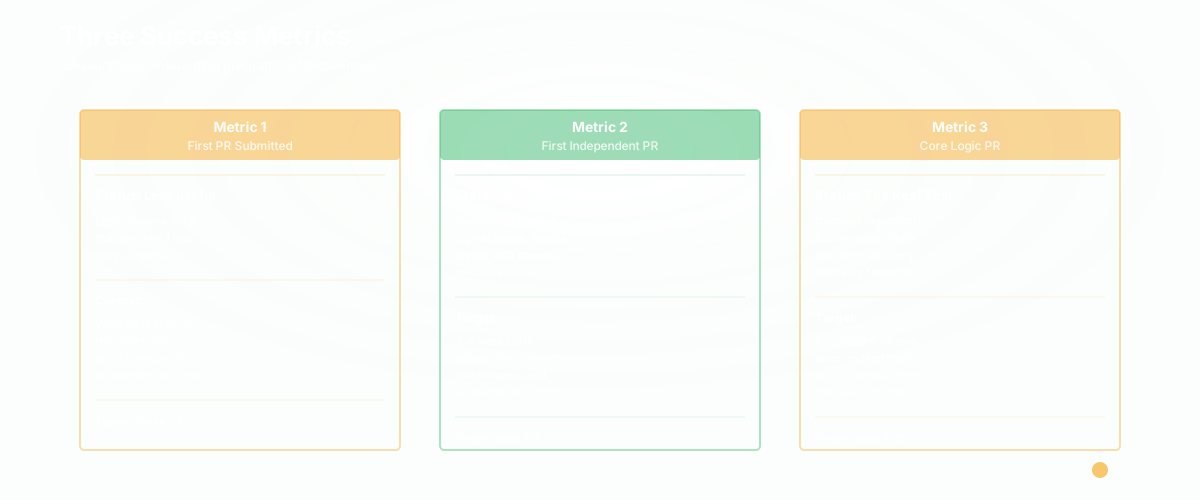
Track three metrics:
-
Time to first PR - too easy to game. A PR that touches 1 line isn't progress. Not useful.
-
Time to first independent PR - a PR that's substantial, makes logical sense, and passes review with minimal revisions. This matters. Target: 3 - 4 weeks.
-
Time to first PR that touches core business logic without revision - a PR that changes how something important works, and it's right the first time (or requires only clarifying feedback). This is the real test. Target: 8 - 12 weeks.
If these numbers are longer, your onboarding is broken. If they're shorter (without sacrificing quality), your onboarding is working.
The Tooling Advantage
One more thing: onboarding is dramatically faster with good tooling.
Codebase intelligence tools that answer "why does this code exist?" without asking someone - those compress onboarding time significantly. Instead of having a senior engineer walk through system design for 3 hours, an engineer can ask a tool "why is authentication split from user profiles?" and get a clear answer in 30 seconds.
This doesn't replace human context-setting. But it handles the 80% of questions that don't require architectural insight. It frees up senior engineers' time and lets new engineers self-serve on context questions.
The fastest-onboarding teams I've worked with combine: (1) structured human walkthroughs for architectural understanding, (2) tooling for answering detailed context questions, (3) careful task selection for early work.
Implementation
Here's what to do Monday:
- Document the 4 - 5 critical user flows in your system
- For each, identify what services touch it, why, and who owns each service
- Create a 1 - hour walkthrough for each flow (don't do all at once)
- Identify 6 - 8 small, well-scoped tasks suitable for a new engineer
- Pair your next new hire with a senior engineer for walkthroughs
- Run the first 3 weeks with structured context-setting
- After 3 weeks, measure: is the engineer productive? Are they unblocked?
After one onboarding cycle, you'll see the impact. Onboarding time drops. New engineers get productive faster. And you'll have documentation and walkthroughs that improve every cycle.
Frequently Asked Questions
Q: What if a new engineer is experienced but new to the company?
They'll ramp faster. Experience helps. But they still need codebase fluency. Don't skip the walkthroughs - they're faster, but they still matter. An experienced engineer might go from 6 months to 6 weeks, or from 6 weeks to 3 weeks. The mechanics don't change.
Q: What if we can't spare senior engineers for walkthroughs?
Then you have a bigger problem than onboarding. Your senior engineers are bottlenecked. But in the short term: pair walkthroughs. Two new engineers with one senior engineer. It saves time and creates peer learning. And use tooling to answer context questions.
Q: How do we maintain walkthroughs as the codebase changes?
Treat them like code. When architecture changes, update the walkthroughs. When critical systems are refactored, update the context. Spend 2 - 3 hours every quarter keeping walkthroughs current. It's worth it.
Q: What about distributed teams?
Walkthroughs work async. Record a senior engineer walking through the codebase and explaining decisions. Have the new engineer watch and ask questions via video chat. It's not as good as synchronous pairing, but it's 80% as effective and scales better.
Related Reading
- What Is Codebase Intelligence?
- What Is Code Intelligence?
- The Product Manager's Guide to Understanding Your Codebase
- The CTO's Guide to Product Visibility
- How to Do Competitive Analysis When You Don't Know Your Own Product