
Duplicate Tickets Are a Symptom: Your Intelligence and Work Systems Aren't Talking
Duplicate tickets in engineering teams are a symptom of disconnected intelligence and work systems, not poor search functionality. When issue trackers like Jira operate without codebase context — ownership maps, dependency graphs, recent code changes — teams create duplicate tickets because they lack the visibility to know a problem has already been reported or is caused by the same underlying code change. Connecting work-tracking tools to codebase intelligence reduces duplicate tickets by up to 78% and speeds triage by 77%, with ROI payback in as little as 3 weeks.
Across three companies — Shiksha Infotech, UshaOm, and Salesken — I've learned that most engineering problems aren't technical. They're visibility problems.
When teams have a lot of duplicate tickets, the instinct is usually to blame search. "People aren't searching Jira well enough" or "our ticket naming is inconsistent." So they improve search, add better templates, invest in naming conventions.
The duplicates persist.
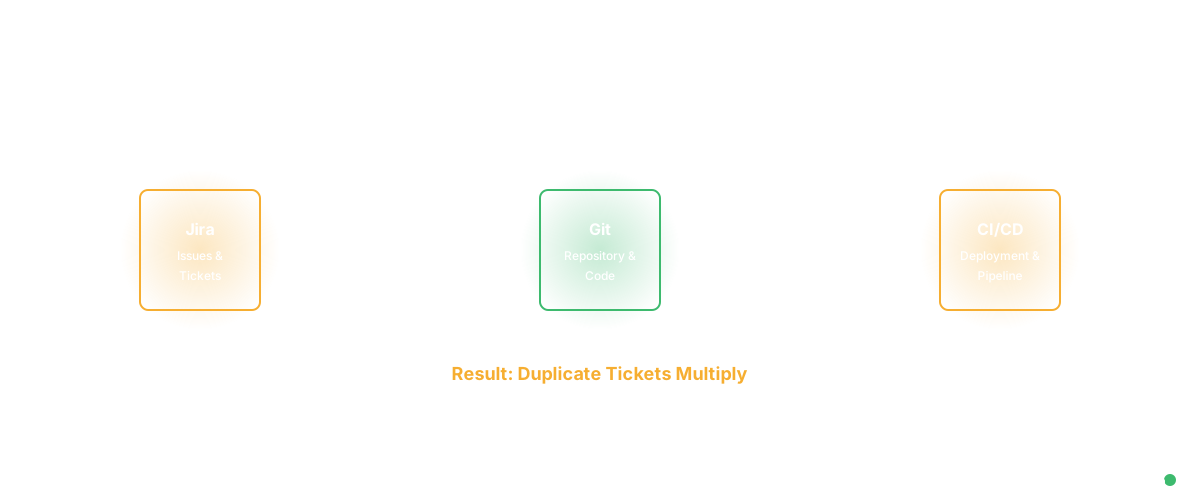
That's because the root cause isn't search. It's that the intelligence and work tracking systems aren't connected. Tickets are created without context about what's already in the codebase or what's been filed about it. The result is rational: an engineer encounters a problem, has no way to know what related issues exist, and creates a new ticket.
This is a structural problem, and the fix is structural.
Why Search Alone Doesn't Work
Before someone opens their issue tracker, they're already operating with incomplete information. They've encountered a bug, noticed performance degradation, or spotted an architectural problem. They want to file it.
The search problem assumes they'll search Jira. But in reality:
-
They might not even know what to search for. "Login is broken" as a search term won't find "authentication service race condition detected in production" because they don't know the race condition exists.
-
They might not know if this is a new issue or a known problem. Without context, they guess. When in doubt, they create a new ticket.
-
They might search and find five tickets that seem related but aren't quite about the same thing. Are they the same bug or different bugs? Without code-level understanding, it's hard to tell.
-
Even if they find a related ticket, they don't know if that ticket is being actively worked or if it's stale. Creating a new ticket feels safer.
The result: duplicates compound because the system doesn't provide the context needed to avoid them.
The Real Problem: Disconnected Systems
Tickets exist in Jira (or Linear, or GitHub Issues). Code exists in your repository. They're completely disconnected.
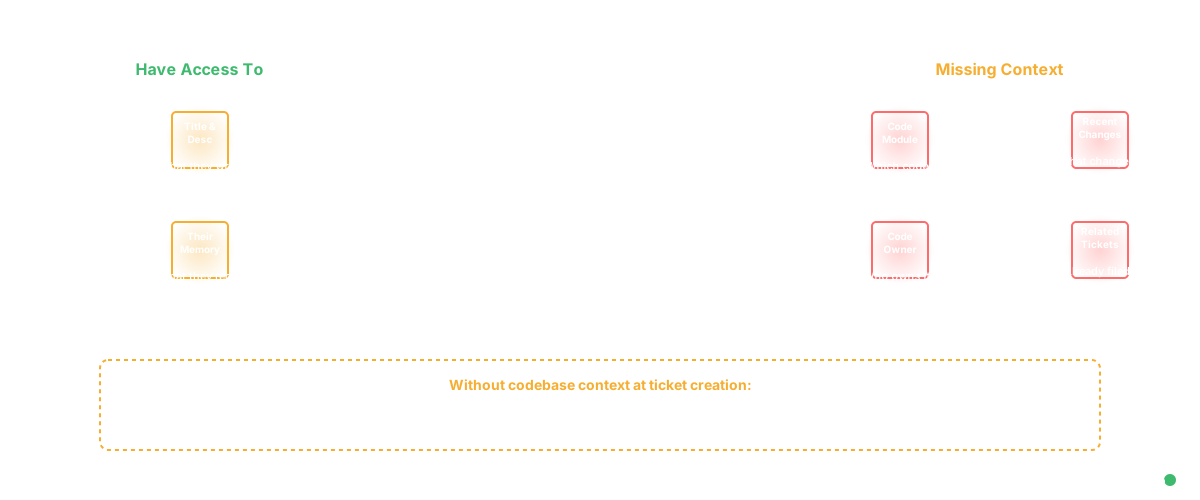
When an engineer creates a ticket, they have access to:
- The title and description they can write
- Maybe some automated field population (assignee suggestions are sometimes useful)
- Their memory of what they've seen before
They have no immediate access to:
- Which module the problem is actually in
- What related code exists
- Who last touched this code and might understand it
- What similar code patterns already exist in the codebase
- Whether this exact problem was encountered before in a different part of the codebase
- What recent changes might have introduced this problem
That missing context is why duplicates exist. It's not a search problem. It's a context availability problem.
The Fix: Connect Codebase Intelligence to Ticket Creation
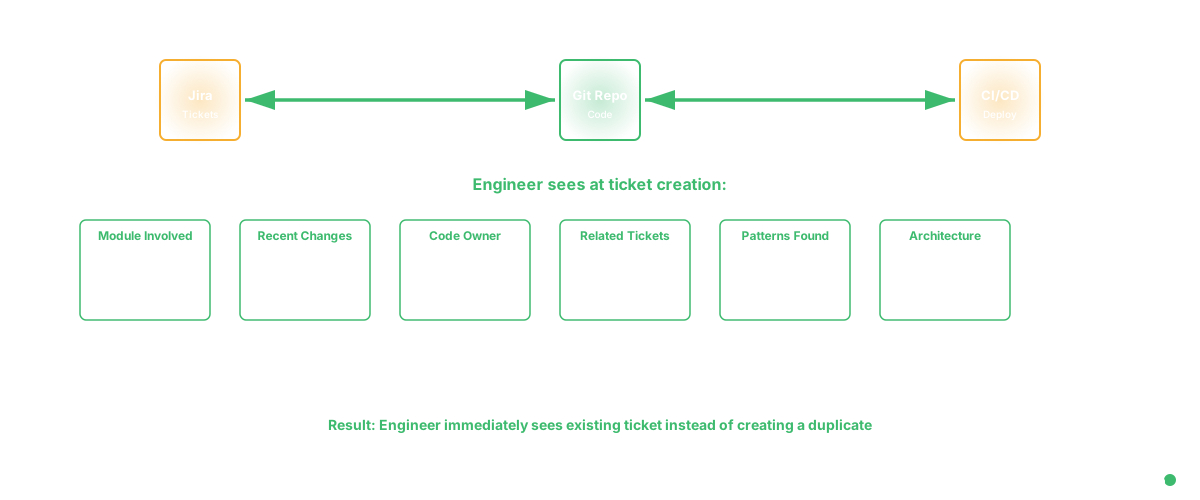
When an engineer is about to create a ticket, they need codebase context at that moment. Specifically:
1. Know which module is involved. If the issue is "login fails in production," codebase context immediately tells you: this involves the auth service, the session store, and the token validation logic. This is actionable location information.
2. See related code changes. What changed recently in the auth service? If a commit landed three days ago that modified token validation logic, that's the likely culprit. Context should surface recent changes to the relevant modules.
3. Identify the owner. Who last modified the authentication service? Not to blame them, but to route the ticket intelligently. The person who most recently worked on the code probably understands it best.
4. Find related tickets. Now that you know the module involved, see what other tickets reference it. "Login is broken" is vague, but when filtered to auth service tickets, you can quickly see if someone already filed "authentication service token validation race condition" last week.
5. Catch parallel implementations. If the ticket is about validation logic, the system should flag: "There's similar validation logic in the payment service that was last changed six months ago. Is this the same issue there?" This catches the pattern where the same bug exists in multiple places undetected.
6. Surface architectural context. Is this module a shared service or internal to one application? Does it have strict contracts or implicit dependencies? This context helps engineers understand the scope of the problem.
With this information available at ticket creation, duplicates drop dramatically. Engineers can quickly see if the problem they've encountered is something that's already been filed. If it is, they can comment on the existing ticket with new details. If it's not, they file it with full context about which code is involved and why it matters.
What This Looks Like
Imagine the current flow:
Engineer (in Slack): "Login is broken for some users." Engineer 2: "Yeah, I saw that too." Engineer 3: "I think I've seen this before. Let me check Jira." (Five minutes of searching) Engineer 3: "I can't find it, let me just create a new ticket." Later: Someone discovers we have 12 open tickets about variations of the same bug across different modules.
Now imagine with connected systems:
Engineer (in Jira issue create dialog): "Login is failing intermittently." Jira shows automatically:
- "This likely involves: auth-service, session-store, api-gateway (recent changes in auth-service)"
- "Owned by: Sarah (last 10 commits to auth-service)"
- "Related tickets: [Shows 3 existing tickets about auth-service]"
- "Code status: Token validation logic was changed 2 days ago. This could be related."
Engineer immediately sees the recent change, recognizes the likely cause, and adds a comment to the existing ticket instead of creating a new one.
That's the difference. The system provides context at the moment a ticket is created.
Beyond Duplicates: Better Triage
Connected systems also improve triage. When a ticket exists with code context, the team can route it more intelligently.
A ticket marked "Performance is slow" without context gets assigned to whoever has capacity. A ticket with context ("The recommendation service is slow, specifically in the Elasticsearch query path, which was refactored last sprint") can be assigned to whoever worked on that refactoring, or whoever owns the recommendations service, with full background already provided.
Triage becomes faster and more accurate.
Why Teams Don't Do This Yet
Most teams don't have this because:
-
Their tools don't support it. Jira doesn't have native integration with code repositories for this kind of context.
-
Building custom integrations is work. You could build a bot that surfaces this context, but it requires engineering effort.
-
They live with the friction. Duplicate tickets are annoying, but not so annoying that they justify the project to fix it.
The teams that do this are usually the ones that either: (a) built custom integrations because the pain was unbearable, or (b) are using tools specifically designed to bridge work tracking and codebase intelligence.
The Broader Point
This is one example of a larger pattern: the best engineering work happens when intelligence systems are connected. Right now, most teams have:
- A work tracking system (Jira/Linear/GitHub)
- A code repository (GitHub/GitLab)
- A deployment system (CI/CD pipeline)
- Maybe an observability system (Datadog/New Relic/CloudWatch)
These systems are mostly separate. Data flows into them, but not between them. The result is inefficiency at every layer: duplicate work, unclear ownership, difficulty triaging, slow onboarding, repeated mistakes.
The teams that move faster have connected these systems. When a ticket is created, code context flows in. When code is deployed, it connects to what was changed. When production issues occur, they connect to the code that changed. When tickets are closed, it connects to the codebase state. Connected systems compound.
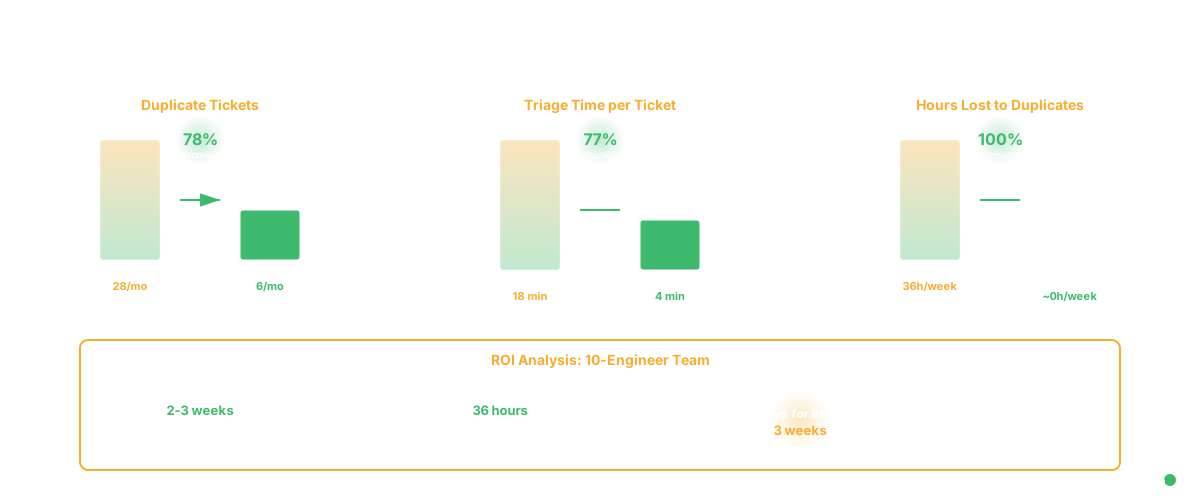
Duplicate tickets are visible symptom of this disconnection. Fix the root cause - connect your systems - and the symptom disappears.
Frequently Asked Questions
Q: Our issue tracker should already prevent duplicates through better search functionality. Why do we need code integration?
A: Better search helps, but it assumes people know what to search for. If you encounter a bug but don't know which module it's in, searching won't help much. Code integration tells you automatically which module is involved, so context becomes available without searching. This is where codebase intelligence and dependency mapping add the most value — surfacing relationships that search alone can't.
Q: How do we know a ticket is truly a duplicate vs. a related-but-different issue?
A: Code context helps here too. If two tickets both reference the same code change, they're probably duplicates. If they reference different code in the same module, they might be related but separate. If they reference different modules entirely, they're definitely different issues. Without code context, it's ambiguous.
Q: Connecting systems sounds like a big implementation effort. What's the ROI?
A: In a team of 10 engineers, if you're spending 2 hours per week dealing with duplicate tickets (searching, consolidating, re-triaging), connecting systems pays for itself in months. In larger teams, it's even clearer. Plus the indirect benefits: faster triage, better ownership mapping, clearer incident response. Teams using connected systems also see improvements in change failure rate and overall engineering efficiency.
Related Reading
- AI Ticket Triage: How Agents Classify, Route, and Prioritize
- AI Bug Triage: How Engineering Teams Cut Triage Time by 80%
- Product OS: Why Every Engineering Team Needs an Operating System
- AI for Product Managers: How Agentic AI Is Transforming Product Management
- Engineering Bottleneck Detection: Finding Constraints Before They Kill Velocity
- Software Productivity: What It Really Means and How to Measure It
- Jira Can't Verify Problem Resolution
- Glue vs Jira