
DORA Metrics Are Not Enough: What They Miss About Your Product
DORA metrics are useful. Deployment frequency, lead time for changes, change failure rate, MTTR ( - ) these tell you something real about how fast and reliably you ship. I use these metrics. Most engineering leaders should.
But they tell you nothing about what you're shipping or whether it matters.
A team can have elite DORA metrics ( - ) deploying multiple times a day, changes landing within a day, 99% success rate, incidents resolved in minutes ( - ) and still be shipping the wrong things. Still accumulating product debt. Still misaligned with what customers need.
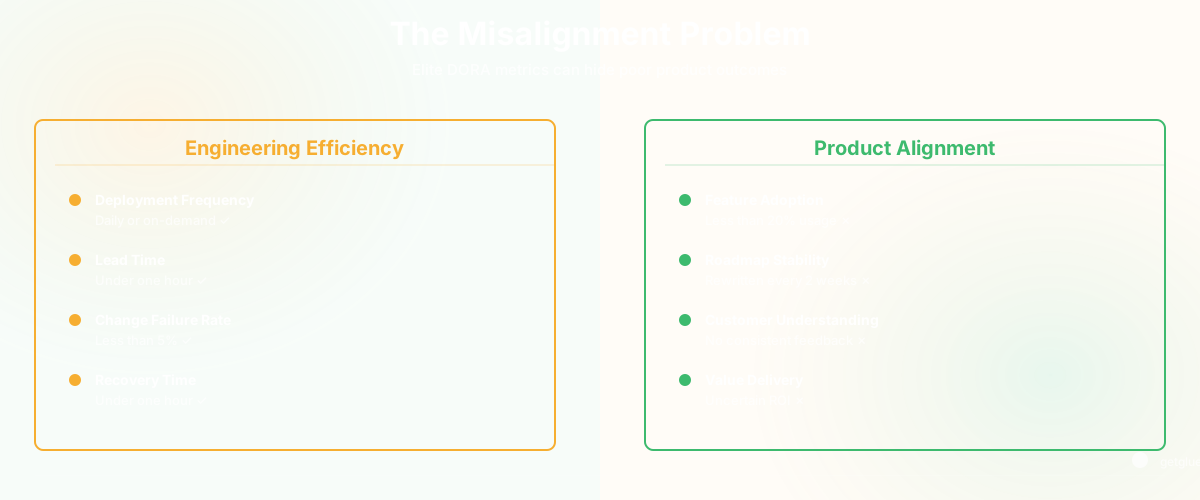
DORA optimizes for engineering efficiency. It doesn't optimize for product alignment. These are not the same thing.
What DORA Measures and What It Doesn't
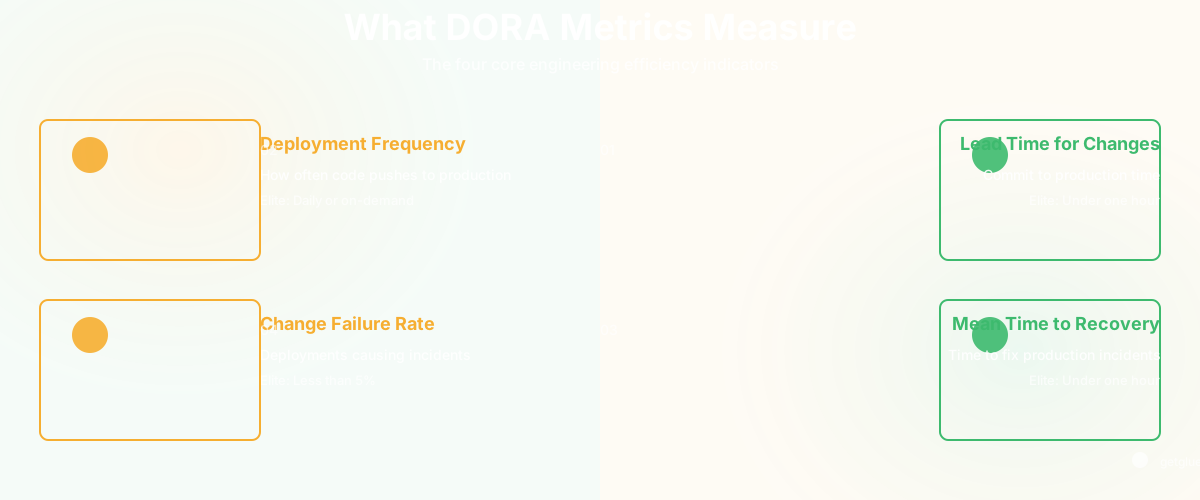
Let me be precise. DORA tells you:
Deployment frequency: How often you push code to production. Elite is daily or on-demand.
Lead time for changes: Time from code commit to production. Elite is under one hour.
Change failure rate: Percentage of deployments that cause incidents. Elite is less than 5%.
MTTR: Time to recover from production incidents. Elite is under one hour.
These are engineering metrics. They measure efficiency in the engineering system. How fast can you move? How reliable is your deployment process? How quick can you fix problems?
What they don't measure: Is anyone using the features you're shipping? Are the features solving customer problems? Is your backlog aligned with business priorities? Are you shipping things you planned to ship or just reacting to urgent requests?
Here's the pattern I've seen: A team has great DORA metrics but low feature adoption. They ship incrementally and reliably. Users see new features in the product every week. But active use of those features is low. The team is moving fast toward unknown.
The Hidden Costs of DORA Misalignment
When engineering metrics are strong but product metrics are weak, something is wrong. Often it's one of three things:
First: You're shipping features nobody asked for. The team is well-organized, they move fast, they deploy reliably. But the backlog is driven by engineering assumptions, not customer feedback. So they ship a beautiful notification system that 2% of users enable, or a new search filter that duplicates existing functionality.
The DORA metrics stay elite. The feature adoption is terrible. Why? Because the team optimized for speed, not for understanding what customers need.
Second: You're abandoning features mid-development. This is common in teams where the backlog changes constantly. A feature gets 40% built, then priorities shift, and it sits in production half-finished. Another feature takes over. The cycle repeats.
DORA metrics actually look good ( - ) you're moving fast, deploying frequently. But feature adoption looks weird: lots of half-complete features, active use concentrated in old features, new features with low adoption.
Third: You're not measuring product outcomes. Some teams don't track whether features are used at all. They ship and move on. The only signal is "did it deploy cleanly" (yes) and "did it cause production incidents" (no). No signal on adoption.
I worked with a 12-person team that had excellent DORA metrics (daily deploys, 30-minute lead time, 98% success rate) but no idea whether their features were being used. They shipped an entirely new dashboard. Elite metrics, beautiful deployment. Three months later, 8% of users had even seen it.
Codebase-to-Product Alignment
Here's a more subtle DORA problem: the metrics don't tell you whether engineering effort is going to the right places.
Imagine a SaaS product with two main customer segments: SMBs and enterprises. Enterprises are 70% of revenue. SMBs are 30%.
Your engineering roadmap is 50-50: half the effort going to SMB features, half to enterprise.
DORA metrics are strong: you're shipping both sets of features fast and reliably.
But you're misaligned. You should be spending 70% of effort on enterprise features. You're spending 50%. The DORA metrics don't tell you this.
This is one reason Glue exists: to answer questions like "which parts of our codebase are changing the most?" If you run that query and find your SMB authentication system getting heavy development while your enterprise reporting is stable, you know something's wrong.
The Real Intelligence You Need
DORA is one layer. Product intelligence is another. Together they tell a real story.
Add these to your metrics:
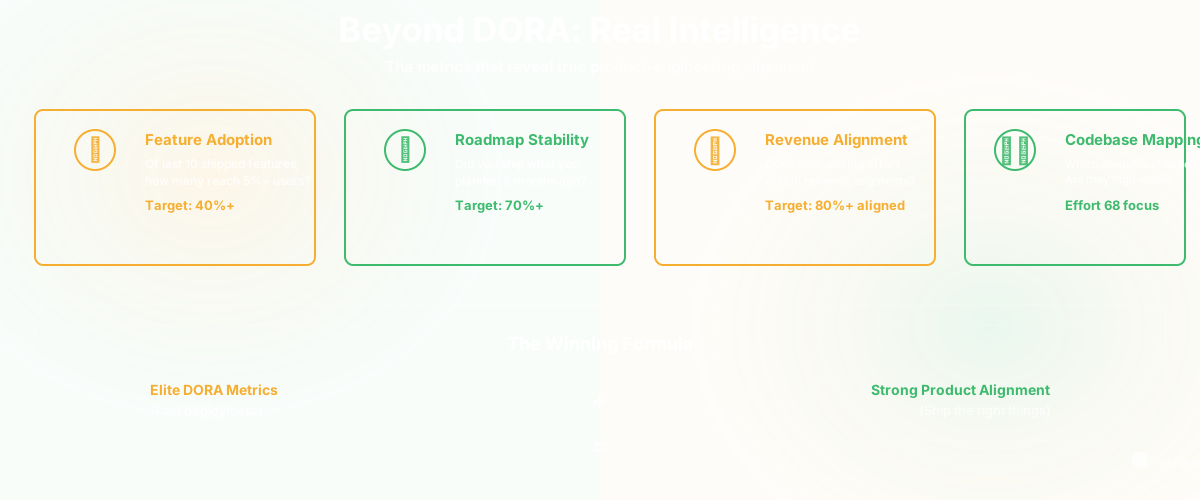
Feature adoption rate: Of the last 10 features you shipped, what percentage are actively used by at least 5% of your user base? If it's less than 40%, you have a prioritization problem.
Roadmap predictability: Did you ship what you planned to ship three months ago? Or did the backlog get rewritten? Elite teams have 70%+ roadmap stability. Reactive teams have 20-30%.
Revenue-to-effort allocation: Break down your engineering effort by business unit or customer segment. Does the effort allocation match the revenue allocation? If not, you're misaligned.
Codebase-to-product mapping: Run a code analysis. Which modules are changing most frequently? Are those the modules supporting your highest-value features? Or are you spinning on low-value features while critical systems get ignored?
These require different tools than DORA tracking. They require: usage analytics, roadmap tracking, revenue data, and codebase analysis. But together with DORA, they tell you whether you're moving fast toward the right thing.
Practical Example: A Real Case
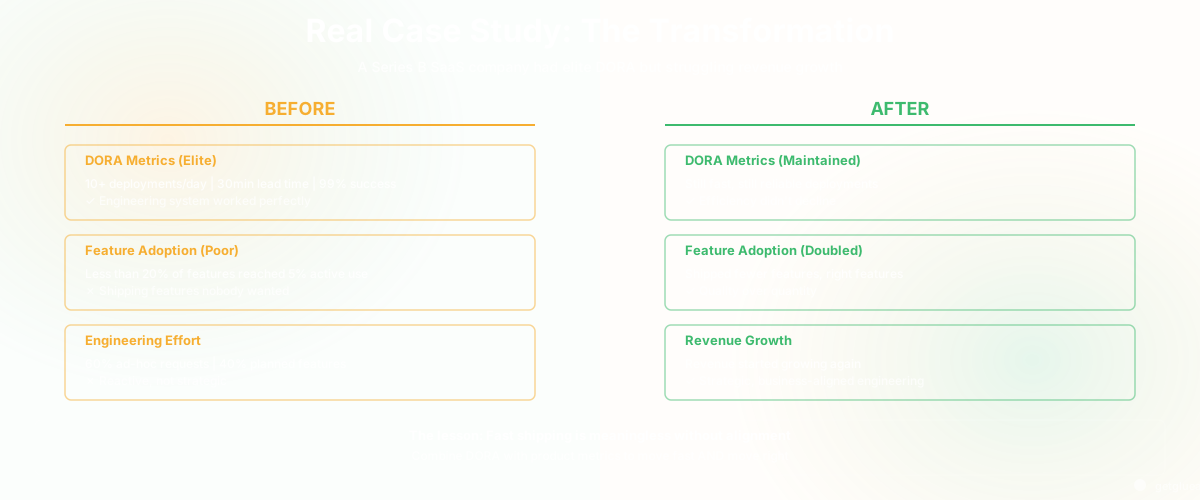
I worked with a Series B SaaS company. Revenue growth had flatlined. They had elite DORA metrics: 10+ deployments a day, sub-30-minute lead time, 99% success rate.
But their feature adoption was terrible. Less than 20% of shipped features reached 5% active use. Their roadmap was rewritten every two weeks ( - ) they were reactive, not strategic.
We did an analysis:
What DORA showed: Fast, reliable deployment process. ( - ) Good news, the engineering system works.
What product analysis showed: 60% of engineering effort going to ad-hoc requests and bug fixes. 40% going to planned features. Of planned features, 65% were completed but only 22% were actively used.
What codebase analysis showed: Three modules ( - ) core reporting, authentication, and data import ( - ) were changing constantly. These supported low-value features that drove very little revenue.
The fix:
-
We tied engineering roadmap to revenue per feature. High-revenue features got priority. Low-revenue features got maintenance mode.
-
We stopped accepting ad-hoc requests that weren't revenue-aligned. (This was hard. It required PM and executive alignment.)
-
We did a quarterly codebase analysis to check: are we spending effort on the modules that support high-value features?
Result: DORA metrics stayed about the same (they were already good). But feature adoption doubled. The team shipped fewer features but they shipped the right ones. Revenue started growing again.
The Honest Assessment
DORA metrics are not enough. They're part of the picture. But they optimize for speed and reliability, not for value. If you're only looking at DORA, you can have a highly efficient team shipping the wrong things.
You need product and codebase intelligence alongside deployment metrics. You need to ask: "Are we fast at shipping the right things, or fast at shipping anything?"
The teams that win have both: elite DORA metrics AND strong product-to-engineering alignment. They move fast and they move right.
Frequently Asked Questions
Q: Should we stop tracking DORA metrics?
No. Keep them. They're genuinely useful for engineering health. Just don't let them be the only signal. Add product metrics alongside them.
Q: Is roadmap stability more important than deployment frequency?
Different question. A stable roadmap with slow deployment is bad. A fast deployment process with an unstable roadmap is also bad. You need both: fast, reliable deployment toward a clear product direction.
Q: How do we know if we're shipping high-value features?
Measure adoption. If a feature shipped three weeks ago has less than 5% active use, either it's not valuable or it's not discoverable. Either way, it's a signal to investigate.
Related Reading
- What Is Engineering Intelligence?
- What Is Codebase Intelligence?
- The CTO's Guide to Product Visibility
- Glue for Competitive Gap Analysis
- What Is Product Knowledge Management?