
Closed-Loop Engineering Intelligence: From Detection to Verified Resolution
Across three companies — Shiksha Infotech, UshaOm, and Salesken — I've learned that most engineering problems aren't technical. They're visibility problems.
An engineering intelligence platform is a system that connects engineering activity data — commits, PRs, deployments, incidents, and project management — into a closed-loop feedback cycle where problems are detected, fixes are implemented, and outcomes are verified automatically. Unlike standalone metrics dashboards that only report numbers, engineering intelligence platforms like Glue, Jellyfish, Faros AI, and Swarmia correlate signals across the entire software delivery lifecycle to surface root causes and verify that interventions actually worked.
Most engineering organizations operate in an open loop. They detect problems (incidents spike, tests fail, code reviews flag complexity), but they have no systematic way to verify that the fix actually addressed the root cause. They deploy a fix, move the ticket to done, and hope the problem doesn't come back. It often does.
The engineering teams that move faster and ship more reliably operate in a closed loop. They detect a problem, understand why it exists in the codebase, fix it, and then verify through automated signals that the underlying issue has actually changed. Not just that a symptom disappeared, but that the root cause has been addressed.
This is the maturity model that separates high-performing teams from everyone else.
The Open-Loop Reality
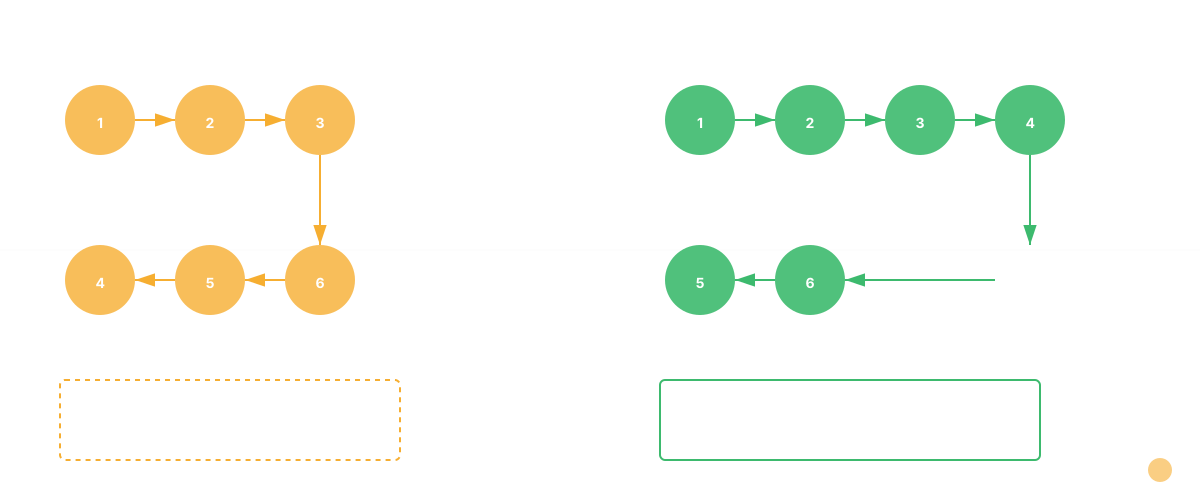
Most teams operate something like this:
-
Detection: A production incident occurs. Tests fail. A code review flags that a module is too complex. A security scan finds a vulnerability.
-
Work Creation: Someone creates a ticket. The ticket describes the symptom: "Login fails intermittently" or "Deploy time is increasing" or "This module is hard to understand."
-
Work Assignment: The ticket gets assigned to someone, usually based on guessing who might know the area, not based on actual ownership data.
-
Investigation: An engineer spends time figuring out what went wrong and where the code actually is. A lot of time is spent on tribal knowledge - "oh, Bob changed that area last month" or "I think that logic is in the payment service, or maybe it's duplicated in the recommendation service."
-
Fix: A fix is implemented. It might fix the symptom, or it might fix a different symptom in the same module.
-
Closure: The ticket is marked done. Everyone moves on.
Then, three sprints later, a similar incident occurs. Or a different engineer investigates the same code and discovers three parallel implementations of the same logic that have drifted apart. Or the module that "isn't complex" gets even more complex because the root cause was never understood.
This is open-loop work. The signal that triggered the ticket doesn't connect back to verify that the change actually worked.
The Closed-Loop Alternative
High-performing teams add steps:
-
Detection: Same as above. Something triggers an alert or fails a test.
-
Diagnosis with Context: Before assigning work, understand the codebase context. What code is involved? Who last changed it? What dependencies does it have? What changed recently that might have triggered this? This is the critical step most teams skip.
-
Verification Target Definition: Before fixing, define what metric or signal will verify the fix actually worked. If the issue is "this module is too complex," the verification target is "complexity score drops from 18 to 10." If the issue is "intermittent login failures," the verification target is "this error stops appearing in logs" or "the race condition is covered by a test."
-
Resolution: Fix the underlying issue, not just the symptom. This usually takes longer because you're solving the real problem, but it prevents recurring incidents.
-
Automated Verification: Run the verification. Did the complexity score actually drop? Does the test covering the race condition exist now? Is the code change reflected in the expected place? This step is not manual human verification - it's automated codebase signals that tell you the underlying issue has been resolved.
The difference is dramatic. Closed-loop work prevents recurring incidents. It establishes ownership (because you know who changed the code). It accelerates onboarding (because new engineers see the pattern: detect, understand, fix with context, verify). It compounds - each resolved issue is truly resolved, so your codebase gets progressively more reliable.
What Makes Closed-Loop Possible
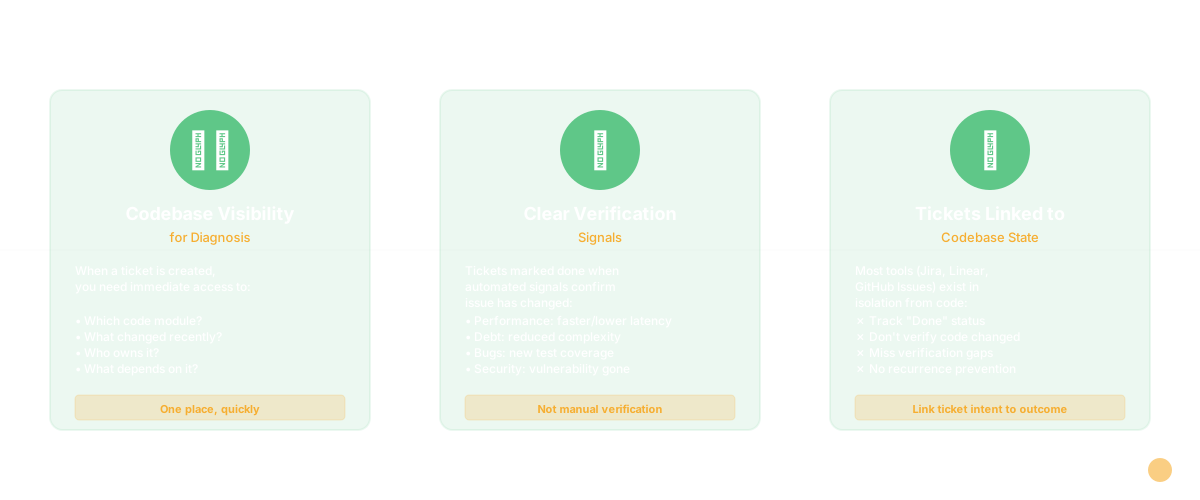
Three things have to be true:
1. Codebase visibility for diagnosis. When a ticket is created, you need immediate access to: Which code module is involved? What changed recently in that module? Who owns it? What depends on it? Most teams have this information scattered across five different systems or trapped in people's heads. Diagnosis requires seeing it in one place, quickly.
2. Clear verification signals. Tickets can't be marked done just because an engineer says so. They're marked done when an automated signal confirms the underlying issue has changed. This requires defining upfront: what will we measure to confirm this is fixed? If it's a performance issue, the signal is faster execution or lower latency. If it's debt, the signal is lower complexity or removed duplication. If it's a bug, the signal is new test coverage proving the bug doesn't exist.
3. Connection between tickets and codebase state. Most work tracking tools (Jira, Linear, GitHub Issues) exist in isolation from codebase intelligence. They track that a ticket is "Done" but they don't check whether the codebase actually changed in the way the ticket intended. Closed-loop work requires linking the two: here's what changed in the codebase, and here's the verification that it addressed the ticket's intent.
The Maturity Progression
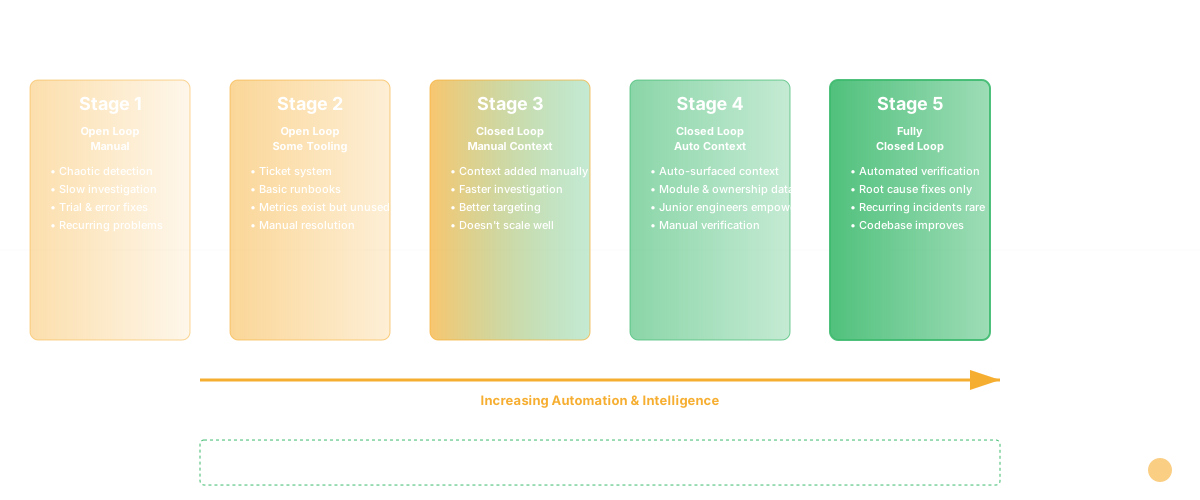
Teams move through stages:
Stage 1: Open Loop, Manual Everything Detection is chaotic (Slack messages, production alerts, "someone mentioned this works differently than I thought"). Investigation is slow because understanding the codebase takes days. Fixes are sometimes correct, sometimes workarounds. Verification is "it seems to work now." Problems recur.
Stage 2: Open Loop, Some Tooling Incidents are tracked in a ticket system. There's a runbook for certain issues. Complexity metrics exist, but they're not connected to work. The signal is generated but no one acts on it systematically. Many issues are still solved through trial and error.
Stage 3: Closed Loop, Manual Context Tickets include codebase context, but it's added manually. A senior engineer reads each ticket, figures out what code is involved, and writes it down. Investigation time drops. Fixes are more targeted. But this doesn't scale - it depends on one person's knowledge.
Stage 4: Closed Loop, Automated Context When a ticket is created, codebase context is automatically surfaced: the module involved, recent changes, ownership, dependencies. Investigation time drops dramatically. Junior engineers can solve problems that would have required a senior engineer before. Fixes are more accurate. Verification is still somewhat manual.
Stage 5: Fully Closed Loop Tickets automatically surface context. Fixes are made with full understanding of impact. Verification is automated: the ticket is marked done only when codebase signals confirm the underlying issue has changed. Recurring incidents drop to near zero. The codebase improves consistently.
What This Looks Like in Practice
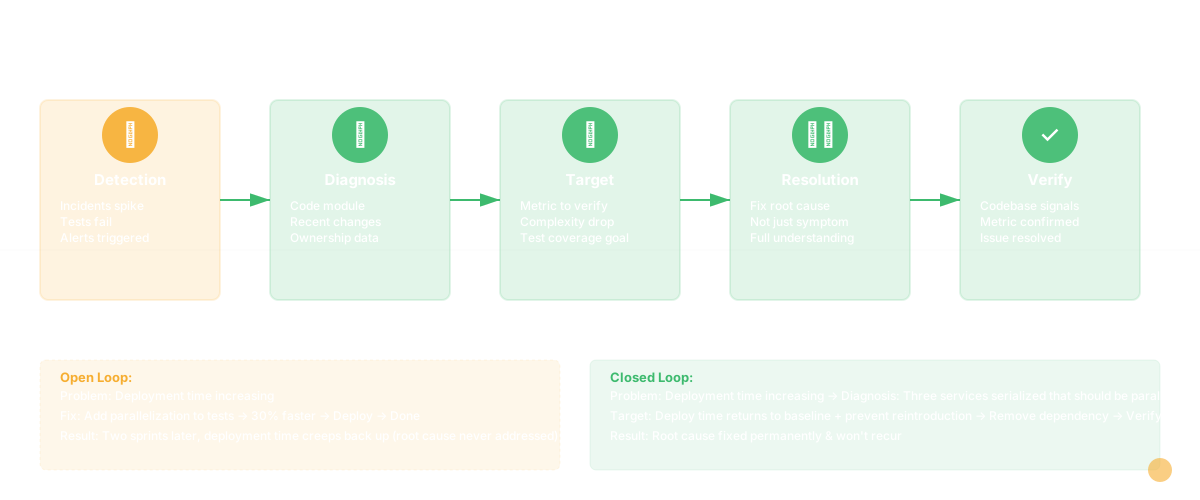
Here's a concrete example:
Open Loop: "Deployment time is increasing." Engineer: "Let's add parallelization to the tests." Deploy change. Tests are now 30% faster. Ticket closed. Two sprints later, deployment time has crept back up because the build process added more code. The root cause was never addressed.
Closed Loop: "Deployment time is increasing." Investigation with context reveals: the build is serializing three services that should be parallel. Root cause: one recent commit added a synchronous dependency between two services. Verification target: deploy time returns to baseline, and new tests prevent the synchronous dependency from being reintroduced. Fix: remove the dependency. Verify: deploy time drops, tests pass. The underlying issue is resolved and won't recur.
Another example:
Open Loop: Security scan finds a dependency with a known vulnerability. Fix: update the dependency. Deploy. Ticket closed. No verification that the vulnerability is actually gone (maybe the dependency is transitive and the vulnerability is still present through another path). No tracking of whether updating that dependency broke anything else.
Closed Loop: Security scan finds a vulnerability. Context shows: which modules use this dependency? Can we upgrade or do we need an alternative? What tests cover the code using this dependency? Update the dependency. Run the tests. Verify through automated scanning that the vulnerability is gone. If tests failed, understand why and fix it before deploying. The vulnerability is gone and you know nothing broke.
The ROI
Closed-loop work is more work upfront. Diagnosis takes time. Defining verification targets takes thought. But the payoff is massive:
- Recurring incidents drop. You're fixing root causes, not symptoms.
- Team velocity actually increases. Less time is wasted investigating the same issues again.
- Onboarding accelerates. New engineers can solve problems with context, not tribal knowledge.
- Technical debt doesn't compound. Each fix is actually permanent.
- Deployments become less scary. You know what changed and why.
For a team of 10 engineers, if closed-loop work prevents just 2 recurring incidents per month, you've saved a week of engineering time. Scale that to larger teams and the ROI is undeniable.
Getting Started
Start small. Pick one category of recurring problem - maybe it's a specific service that has frequent incidents, or a module that's constantly being refactored. For the next ticket in that category, add the three steps: diagnosis with context, verification target definition, automated verification. See what happens.
The overhead is real the first time. The second time it happens, the diagnosis is faster because you understand the codebase better. The third time, you might prevent the incident entirely because the verification caught it in review.
That's closed-loop work. Not perfect engineering, but engineering that compounds in the right direction.
Frequently Asked Questions
Q: What is an engineering intelligence platform and why do teams need one?
A: An engineering intelligence platform is a system that connects data from across your software delivery lifecycle — commits, PRs, deployments, incidents, and project management — into a unified view that surfaces root causes, tracks resolution, and verifies outcomes. Unlike standalone metrics dashboards that only report numbers, engineering intelligence platforms like Glue, Jellyfish, Faros AI, and Swarmia close the feedback loop: they detect a problem, track the fix through the pipeline, and verify the fix actually resolved the root cause. Teams need them because most engineering organizations operate in an open loop — they deploy a fix, move the ticket to done, and hope the problem doesn't recur. It often does.
Q: This sounds like a lot of overhead for every ticket. How do we do this at scale?
A: You don't do it for every ticket. You do it for recurring problems and high-impact issues. A ticket that's been created three times is worth the diagnosis overhead. A ticket that's a one-time fix can be open-loop. Be selective.
Q: How do we define verification targets for things like "code is hard to understand"?
A: Translate vague statements to measurable signals. "Hard to understand" usually means high cyclomatic complexity, poor test coverage, or undocumented contracts. Pick one: reduce complexity from 12 to 8, add tests covering the untested paths, or document the function's preconditions. Something verifiable.
Q: What if the verification signal doesn't change after we fix it?
A: That's useful information. It means either the fix didn't address the root cause, or you defined the verification target wrong. This is why closed-loop work is better - it surfaces problems quickly instead of letting them hide until the next incident.
Related Reading
- Programmer Productivity: Why Measuring Output Is the Wrong Question
- Developer Productivity: Stop Measuring Output, Start Measuring Impact
- DORA Metrics: The Complete Guide for Engineering Leaders
- Engineering Efficiency Metrics: The 12 Numbers That Actually Matter
- What Is a Technical Lead? More Than Just the Best Coder
- Software Productivity: What It Really Means and How to Measure It
- The Engineering Feedback Loop That Most Teams Are Missing
- What Is an Engineering Feedback Loop?
- What Is Closed-Loop Engineering Intelligence?