
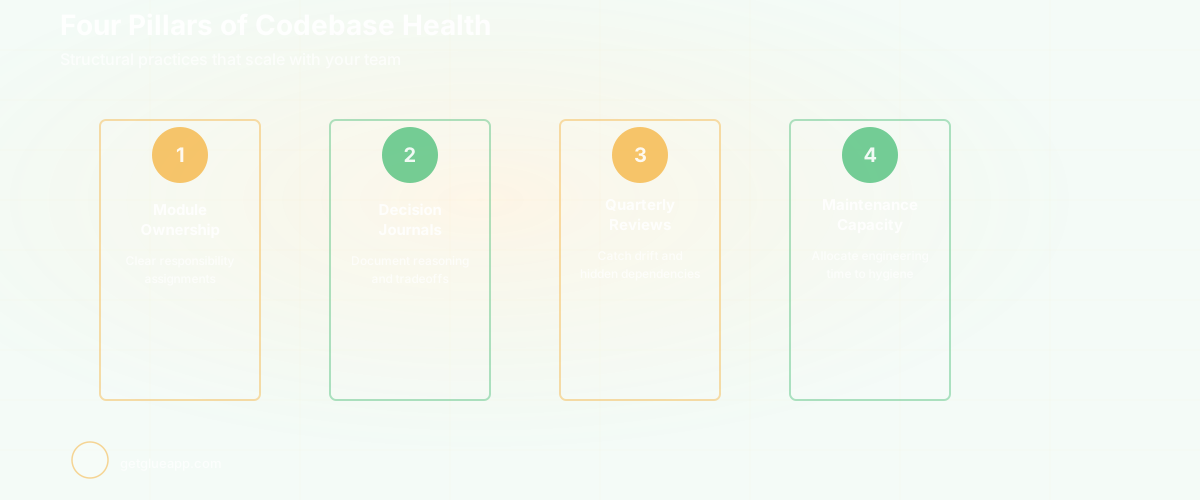
Top engineering teams differentiate themselves through one structural choice: treating the codebase as a first-class product with recurring investment in understandability. The four pillars that separate high-performing teams are explicit module ownership (every directory has an owner), architectural decision journals (documenting why decisions were made, not just what was built), quarterly codebase health reviews, and dedicated maintenance capacity (minimum 4 hours/month even for small teams). Understandable codebases compound — each quarter the codebase gets clearer, new engineers onboard faster, incidents resolve quicker, and features ship with less friction.
Across three companies — Shiksha Infotech, UshaOm, and Salesken — I've seen the same engineering challenges repeat. The details change but the patterns don't.
By Vaibhav Verma
Your engineering team just shipped a feature in half the expected time. Nobody knows why. Understanding software project estimation helps teams predict timelines accurately, and the best teams document these estimates alongside their work. The codebase was equally messy as it was last quarter. The same people were writing it. The only difference? One module was organized around decisions, and everyone understood the tradeoffs embedded in the code.
The top 1% of engineering teams don't succeed because they have better developers. They succeed because they've made a choice: they treat the codebase as a product, not a byproduct. The best teams know that making code run is different from making code understandable, and they've optimized for the latter.
Code as a Deliverable, Not a Side Effect
Most teams approach the codebase as infrastructure that supports the real product ( - the thing customers see). This is backward. The codebase is the product that engineers ship to each other. When your codebase is opaque, every engineer downstream pays a tax. They reverse-engineer decisions. They re-implement features that already exist. They make "local optimizations" that damage the global system.
The top teams I've talked to all describe the same shift: they stopped thinking "we need to document more" and started thinking "the codebase itself needs to be clear enough that a competent engineer can navigate it without sitting with the original author for two hours."
This sounds obvious. It's not. It's a structural choice that cascades through everything: how you design systems, how you onboard people, how you accept code reviews, how you respond to incidents.
What It Actually Looks Like
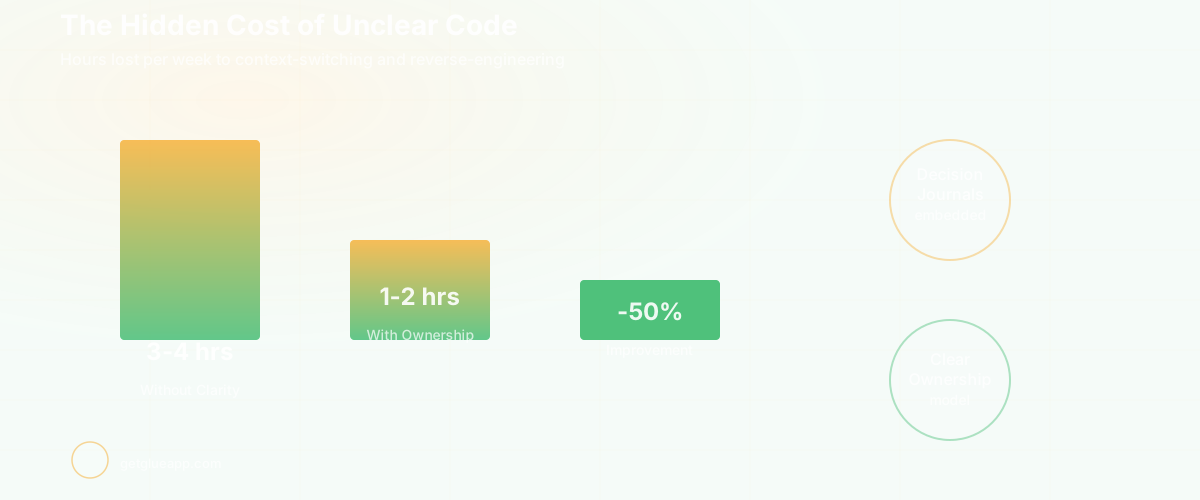
Here's what this looks like in practice. A 120-person SaaS company I spoke with with had standard documentation: a wiki, README files, a runbook for deployments. None of it was wrong. But engineers still spent 3 ( - 4) hours per week context-switching between projects because the codebase itself didn't answer the questions they had.
They started with module ownership. Not "who wrote this" but "who is responsible for this module right now, and how do I reach them?" They tied it to the actual code. Then they started requiring what they called "decision journals" ( - basically, architecture decision records) for any module over 500 lines. Not the architecture itself, but the reasoning behind the constraints and assumptions.
They got brutal about onboarding. New engineers didn't get tutorials. They got guided codebase walkthroughs. "Here are the five modules you'll touch most. Here's why each one exists. Here's where we made tradeoffs. Here's where we're not happy." Those walkthroughs caught design problems the veterans had stopped noticing.
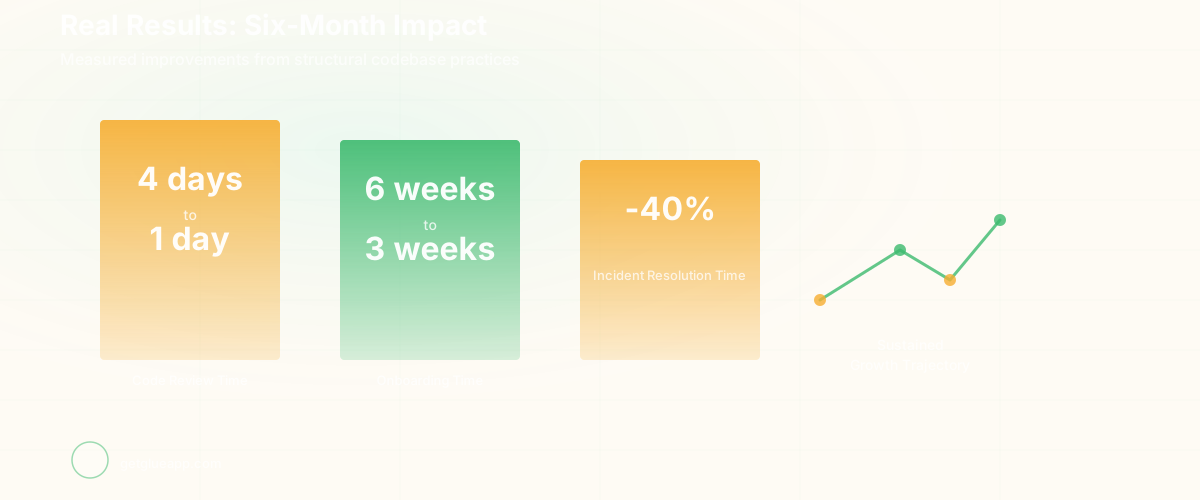
Within six months, the median time a feature spent in code review dropped from 4 days to 1 day. Not because they loosened standards ( - they tightened them) but because reviewers could actually understand what they were reviewing. Onboarding time for engineers fell from 6 weeks to 3 weeks. Incident resolution time on owned modules fell by 40%.
Codebase Health as a Recurring Practice
The difference between teams that sustain this and teams that slip back is one thing: they treat codebase health as a quarterly or monthly practice, not a one-time fix.
Top teams run codebase reviews. Not code reviews (everyone does those). They review modules for: Are the boundaries still making sense? Is this still owned by someone? Are there dependencies we forgot we had? Does this module do one thing or has it drifted? This is a 2 ( - 3) hour conversation where architecture, product, and infrastructure sit down and look at the actual system.
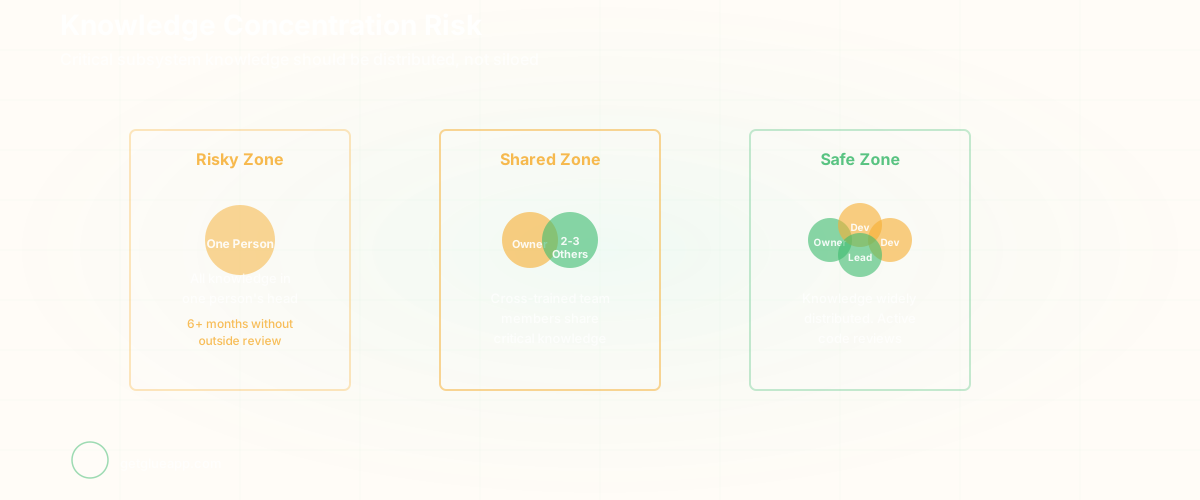
They monitor what I'd call "knowledge concentration." If all the knowledge about a critical subsystem lives in one person's head, that's a risk. Some teams track this explicitly: if a module goes six months without a code review from anyone but the owner, that's a signal. Time to bring someone else in. Teach them.
They also budget for maintenance work the way you budget for refactoring: not as technical debt repayment, but as capacity. A 15-person team might block one engineer per sprint for "codebase hygiene work." That engineer isn't shipping features. They're improving the understandability of the system they all depend on.
Where Tooling Fits
The harder part is that understanding scales much slower than code does. Your codebase grows. Your team grows. The people who understood every module five years ago are no longer at the company. At some point, you need help.
This is where tools like Glue come in. Not as a substitute for the structural work ( - the ownership, the decision journals, the codebase reviews ( - but as the layer that makes those practices actually work at scale.
When you can ask "who owns the payment module?" and get a real answer in 30 seconds, you stop hoarding knowledge. When you can see "this module touches these 14 other modules" without reading code, you make better architectural decisions. When you can review "what changed in this subsystem last quarter?" without combing through Git history, you catch drift faster.
The point isn't the tool. The point is that the top teams have figured out that understandable codebases compound. Every quarter the codebase gets clearer, the next engineer that joins the team is more productive. Every incident gets resolved faster because the system isn't mysterious. Every feature takes less time because you're not fighting against opaque code.
The awesome list of what top engineering teams do, then, isn't about individual practices. It's about this one structural choice: treat the codebase as a first-class product. Make understanding it a recurring investment. Give your team the visibility they need to sustain that investment as you scale.
Frequently Asked Questions
Q: Isn't this just saying we need better documentation?
No. Documentation is often read once and becomes stale. This is about the codebase itself being designed so that a competent engineer doesn't need documentation to navigate it — clear naming, explicit ownership, visible code dependencies, and software architecture documentation embedded in the system itself.
Q: We're a small team. Is this overkill?
It's the opposite. Small teams benefit most because the overhead is low. Spending 4 hours a month on codebase health when you're 8 people is the difference between a codebase you scale with and one that becomes your bottleneck at 25 people.
Q: How do we start without it becoming another process that dies?
Pick one thing: either module ownership or decision journals. Don't do both. Do the one thing well for a month. Then add the second. Processes stick when they're light and solve actual problems people have ( - not when they're imposed from above.
Related Reading
- DORA Metrics: The Complete Guide for Engineering Leaders
- Software Productivity: What It Really Means and How to Measure It
- Developer Productivity: Stop Measuring Output, Start Measuring Impact
- Technical Debt: The Complete Guide for Engineering Leaders
- Cycle Time: Definition, Formula, and Why It Matters
- AI Agents for Engineering Teams: From Copilot to Autonomous Ops