Comparison
Waydev measures git activity. Glue measures codebase structure. Understand why context matters for engineering metrics.
Waydev is an early pioneer in engineering analytics based on git data - commit patterns, PR metrics, code churn, and developer productivity scoring. It's genuinely useful for teams that want git-level visibility into how work is happening. But the limitations of git-only metrics have become clearer as more sophisticated tools entered the space.
Waydev analyzes your git history to extract metrics: how frequently does code churn (lines added/removed)? How many commits per developer? PR size and review cycles? How long code sits in branches before merge? Waydev also scores developer productivity based on these metrics.
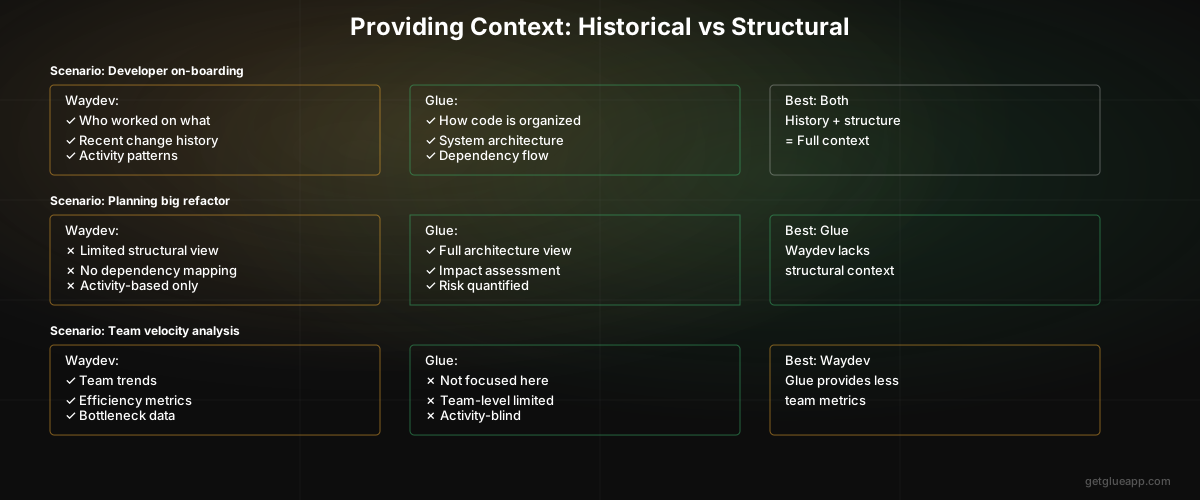
For engineering leaders focused on individual or team output metrics, Waydev provides visibility. You can see who's committing, how frequently, what the review cycle looks like, and compare teams on these dimensions.
Waydev has added more features over the years (code review analytics, benchmarking), but the foundation remains git-based metrics.
The engineering community has learned an important lesson about git-based metrics: they're unreliable productivity signals. Lines of code, commit frequency, and code churn can all be gamed. A developer can make 50 commits of one-line changes or write a 500-line commit with multiple features. Both tell you something about behavior, but neither tells you anything reliable about output quality or impact.
More fundamentally, git metrics tell you WHAT happened in the repository, not WHY it matters. A module saw 200 commits last quarter. Is that because it's important and being improved? Or because it's unstable and being constantly patched? Git can't answer that question.
Glue analyzes the codebase structure itself: complexity, dependencies, ownership, and change patterns in the context of what they mean for product delivery.
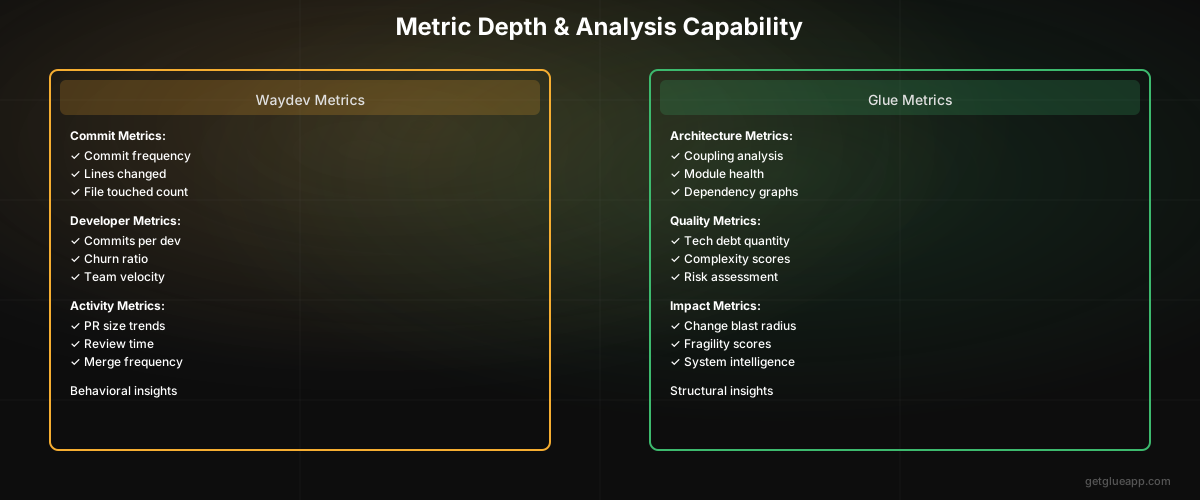
When Glue sees high change frequency, it connects that to the module's complexity and criticality: "This module is changing constantly, it has high complexity, and six other modules depend on it. That's a structural risk pattern." Git metrics alone would just show: "This module has high churn."
Glue also answers "why" questions. Why was this module changed? What problem was it solving? What patterns of change correlate with stability vs. instability?
Waydev tells you what developers did. Glue tells you what the codebase actually shows.
Example: Waydev shows Developer A had 30 commits last week, Developer B had 5 commits. That's data, but it's incomplete. Developer B might have written architectural foundation code in a few commits that prevented five future projects from being derailed. Developer A might have made 30 small patches to a module that should be refactored entirely. The commits don't tell you impact.
Another example: Waydev shows that pull request cycle time has increased from 1 day to 3 days. That's a process change worth investigating. But Glue might show: the modules being modified have doubled in complexity, so longer review times are appropriate. The process didn't slow down, the system got harder to change safely.
Many teams have moved away from pure git metrics as their primary engineering health indicator because they're not predictive of actual outcomes. Waydev metrics don't tell you whether you're building a sustainable system.
| Capability | Waydev | Glue |
|---|---|---|
| Commit frequency tracking | Yes | Not applicable |
| Developer output metrics | Yes | Not applicable |
| PR review cycle analysis | Yes | Not applicable |
| Code churn measurement | Yes | Not applicable |
| Team benchmarking | Yes | Not applicable |
| Context for metrics | Limited | Yes |
| Architectural impact | No | Core |
| Complexity analysis | No | Yes |
| Module criticality | No | Yes |
| Change pattern context | Limited | Yes |
| Productivity impact of structure | No | Yes |
| Sustainability indicators | No | Yes |
Choose Waydev if you want visibility into git-level metrics and team output. If you're measuring developer productivity primarily through commit and PR data, Waydev is the tool built for that.
Waydev is useful if you want to baseline your team's git patterns and track whether those patterns are changing.
Choose Glue when you want to understand what the git activity actually means for your product and system health. Glue answers the questions git metrics alone can't: "Is this change frequency healthy? Is this module getting better or just getting patched?"
Choose Glue if you've relied on git metrics before and learned that they don't reliably predict productivity or system quality. Glue provides the structural context that makes metrics meaningful.
Choose Glue if you're a CTO trying to understand system health and sustainability, not just developer output volume.
Q: Are git metrics useless?
Not entirely, but they're insufficient. Git metrics tell you something is happening in the repository. Glue tells you what that activity means for system health.
Q: Can I use both Waydev and Glue?
Yes. Use Waydev for visibility into team output and process metrics (commit frequency, review cycles). Use Glue to understand what the code structure shows about that output's impact.
Q: Does Glue track commits and PRs?
Glue analyzes change patterns from git history, but not in the same way. Waydev tracks "commits per developer." Glue tracks "which modules are changing and what does that pattern indicate about stability?"
Q: Why have companies moved away from productivity metrics?
Because they can be gamed and don't correlate with outcomes. A team that ships fewer commits but delivers more value is better. A module that stops changing but is still heavily used is better than one being constantly patched. Git metrics measure activity, not impact.
Q: If my team likes Waydev, should I get Glue instead?
No, they serve different functions. Keep Waydev for visibility into team process. Add Glue for visibility into system health.
Q: How do Waydev's benchmarking features compare to Glue?
Waydev benchmarks on git metrics (commits, PR cycles). Glue benchmarks on structural health (complexity, dependencies, ownership). Different dimensions of comparison.
Q: Can Glue help me set better Waydev metrics?
Yes. Understanding which modules are architecturally critical helps you interpret commit frequency properly. High commit frequency in a critical module is different from high frequency in an ancillary utility.
Keep reading